
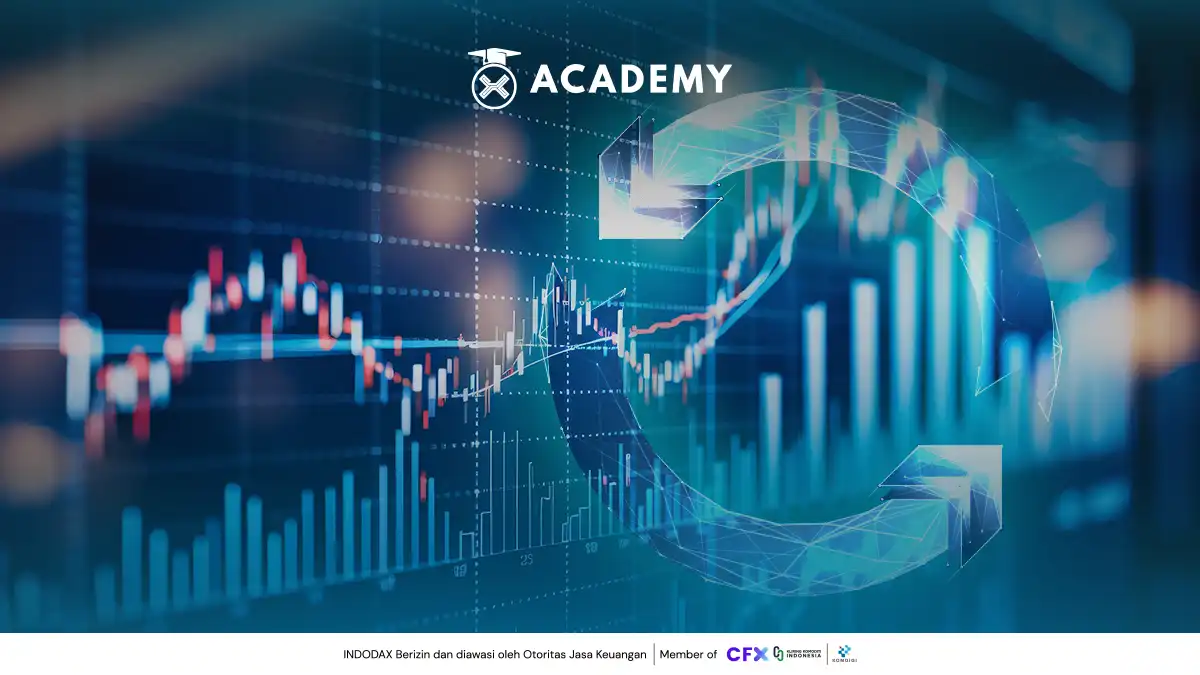
In the crypto market, price increases don’t always occur simultaneously. Movements usually occur alternately, for example, one asset rises first while others remain stagnant.
In many cases, for example, Bitcoin is often the first to move, then some altcoins follow. At that time, there are still other coins that haven’t changed at all.
This situation often leaves investors feeling left behind because they are only focused on one asset while others begin to move first.
This raises the question: why does the flow of money in the crypto market seem to constantly shift from one asset to another?
This pattern is known as rotation play, which is the movement of capital between assets that traders often use to identify opportunities in each market phase.
What is Rotation Play?

Rotation play is a strategy of moving funds from one asset to another to follow the current market momentum.
This isn’t just a simple buying and selling strategy, but rather a way of reading the direction of money flow or capital flow in the market.
This strategy is commonly used in both the stock and crypto markets because price movements often follow where large funds are entering and exiting.
Why Does Rotation Play Occur in the Crypto Market?
Rotation play occurs because market movements are not static. Fund flows constantly change according to conditions, sentiment, and opportunities seen at each phase. Here are some of the causes of rotation play in the crypto market.
1. Liquidity Shift
Money in the market doesn’t stay in one asset, especially if you understand what crypto liquidity is and how funds flow in the market.
This shift is influenced by many factors, from market conditions, growth expectations, to the direction of global liquidity.
2. Crypto Market Cycles
Market movements usually follow a pattern: Bitcoin rises first, then Ethereum, and then spreads to altcoins. This is similar to the economic cycle in the stock market, where capital shifts as growth phases change.
3. Sentiment Changes
Market direction is also determined by narrative shifts. When focus shifts, for example, from large assets to a specific sector, funds shift accordingly. Factors such as monetary policy, inflation, or global issues often trigger these sentiment changes.
4. Differences in Asset Momentum
Not all coins move simultaneously. Some assets show an increase first due to factors such as project performance or ecosystem growth.
When one asset slows down, attention and funds usually begin to shift to another asset that is just starting to show momentum.
Types of Rotation Play in Crypto
In the crypto market, rotation play is seen in several patterns of fund movement.
1. Bitcoin to Altcoins
The movement usually starts with Bitcoin, then funds begin to flow into altcoins when Bitcoin’s momentum slows.
The goal is similar to rotation in the stock market: moving funds from assets that are becoming oversaturated to assets that still have potential to rise. This phase is often known as altseason.
2. Inter-Sector
Funds can also move between sectors within crypto, for example from DeFi to AI to gaming.
This occurs because large investors continually adjust their positions based on trends, narratives, and growth potential in each sector, similar to sector rotation in the stock market.
3. Large Cap to Small Cap
As market conditions improve and confidence increases, funds tend to move from large-cap assets to smaller-cap assets.
This shift reflects increased risk appetite, as investors begin to seek higher potential returns in previously undervalued assets.
How Rotation Play Works
Rotation play operates in a simple way, following the shift in fund flow from one asset to another. Here’s how rotation play works.
1. Identify Assets That Have Already Rised
The first step is to look for assets that have already experienced an increase. At this stage, the potential for profit-taking usually begins to emerge because prices are considered high enough.
2. Look for Assets That Have Not Moved
After that, attention shifts to other assets that are still lagging behind. These assets are often seen as early opportunities because they haven’t yet been touched by much capital flow.
3. Move Funds
Funds are then shifted to assets that are starting to show potential for increase. This aligns with the concept of moving investments from weakening to strengthening ones, following market momentum.
4. Repeat the Cycle
This process repeats itself because markets always move in cycles. Large investors consistently adjust their positions based on market conditions, so the turnover of funds never truly stops.
Rotation Play Strategies
To maximize rotation play, the approach needs to be practical and based on reading market conditions. Here are some strategies for using rotation play.
1. Monitor Bitcoin Dominance
Bitcoin dominance is often an early indicator of a rotation. When dominance begins to decline, it could signal funds are starting to flow into altcoins, similar to how sectors shift during a changing economic cycle.
2. Pay Attention to Market Narratives
Fund direction is heavily influenced by prevailing narratives, such as those surrounding AI, DeFi, or other sectors. Large investors typically adjust their positions based on trends and growth expectations, so a change in narrative often triggers rotations.
3. Use Volume and Momentum
Valid movements are usually supported by strong volume and momentum. When an asset begins to outperform others, this can be an early signal of a shift in fund flows.
4. Don’t Be Too Late
Getting in early is more important than chasing peak prices. When an asset has risen too far, the risk increases because profit-taking can begin and funds can quickly shift to other assets.
Examples of Rotation Play in the Crypto Market
Rotation play can be directly observed from recurring market movement patterns across various phases. Here are some common examples of rotation play in the crypto market.
1. BTC Bullish? Altcoins Rising
This is a classic cycle. When Bitcoin rises first and then begins to slow, funds typically shift to altcoins.
The goal is similar to rotation in the stock market: moving capital from assets that are becoming saturated to assets that still have room for growth.
2. Narrative AI
When the AI ??narrative strengthens, coins in this sector don’t rise simultaneously, but alternately. Funds move from one project to another that is starting to show potential, following growth expectations and market attention.
3. Meme Coin Rotation
In the meme coin sector, rotation occurs more rapidly. Liquidity moves quickly from one coin to another that is trending, reflecting how capital continues to seek opportunities with the strongest momentum.
Risks of Using Rotation Play
While it offers opportunities, rotation play still carries risks because it relies on timing and the direction of cash flow, which can change rapidly. These include the following:
1. Wrong Timing
Entering too late when an asset has already risen significantly can immediately put pressure on a position. At this stage, profit-taking usually begins as funds prepare to move to other assets.
2. False Narrative
Not all trends last. There are situations where the narrative appears strong at the beginning, but quickly weakens, causing cash flow to not continue as expected.
3. Overtrading
Moving funds too frequently can actually be detrimental. In addition to increasing transaction costs, hasty decisions often result in suboptimal positions.
4. Excessive Emotion
Fast market movements can easily trigger FOMO. Emotionally driven decisions often lead to entry at the wrong time, especially when the price is already at its peak.
The Difference Between Rotation Play and Hold
In the crypto market, rotation play and hold are often considered similar, but they are actually different approaches. Here are the differences between the two.
1. Rotation Play
Rotation play is active, moving funds from one asset to another to follow the current flow of capital. This strategy focuses on momentum, with the goal of seizing opportunities from shifts in strengthening assets.
2. Hold
Hold is more passive and long-term oriented. Funds are placed in a specific asset and allowed to grow over time, without overly following short-term market movements.
Essentially, the main difference between the two lies in the objective. Rotation play seeks to capitalize on shorter-term momentum swings, while hold emphasizes long-term asset value growth.
When is Rotation Play Used?
Rotation play typically works optimally when market conditions support active fund flow. Here are some opportune moments to employ a rotation play strategy.
1. Bullish Market
In a bullish market, funds tend to continuously rotate in search of new opportunities. Assets that have risen will begin to be abandoned, and capital will shift to other assets that are strengthening, making this strategy most effective.
2. When There Are Many Narratives
When multiple narratives develop, such as a particular sector becoming a market focus, funds will shift between these sectors. This reflects how investors adjust their positions based on trends and growth potential.
3. When There’s High Liquidity
An active market with high liquidity allows for faster and clearer fund movements. In these conditions, rotation between assets is easier because transaction volume supports continuous capital movement.
In addition to gaining in-depth insights through various popular crypto education articles, you can also broaden your knowledge through a collection of tutorials and choose from a variety of popular articles that suit your interests.
Besides updating your knowledge, you can also directly monitor digital asset prices on Indodax Market, such as Bitcoin (BTC to IDR) or other assets, and stay up-to-date with the latest crypto news. For a more personalized trading experience, explore Indodax’s OTC trading service. Don’t forget to activate notifications to stay informed about blockchain, crypto assets, and other trading opportunities.
You can also follow our latest news on Google News for faster and more reliable information. For an easy and secure trading experience, download the best crypto app from INDODAX on the App Store or Google Play Store.
Maximize your crypto assets with the INDODAX crypto staking feature, a practical way to earn passive income from your stored assets. Register now with INDODAX and easily complete KYC to start trading crypto more safely, conveniently, and reliably!
In practice, asset transparency is now being adopted by a number of crypto platforms, one of which is through the publication of Proof of Reserves (PoR) data from third parties like CoinMarketCap. In Indonesia, Indodax is one of the platforms that regularly updates this information for public access.
Official Indodax Contact
Customer Service Number: (021) 5065 8888 | Support Email: [email protected]
Also follow our social media here: Instagram, X, YouTube & Telegram

Conclusion
So, that was an interesting discussion about rotation play as a strategy for moving assets to maximize profits in crypto, which you can read more about in the INDODAX Academy.
In conclusion, rotation play is essentially a way of reading liquidity movements, not simply choosing assets that look attractive.
In the crypto market, prices are often simply a reflection of where large funds are moving, so understanding the flow of money is key to spotting opportunities early.
This approach requires sensitivity to changing market phases. When one asset starts to lose momentum, attention shifts to another asset that is just showing potential.
This is where rotation play comes into play, capitalizing on these shifts before they become broader movements.
For traders, the edge doesn’t always come from choosing the best assets from the start, but from the ability to follow the currents that are forming.
Those who can read rotations tend to be more adaptable, as they aren’t fixated on one position when market conditions change.
Ultimately, rotation play isn’t about constantly changing, but rather about understanding when to hold and when to move with the prevailing momentum.
FAQ
- What is rotation play?
Rotation play is a strategy of moving funds between assets to follow market momentum. - Is rotation play suitable for beginners?
Yes, but it requires a good understanding of the market. - What are examples of rotation play in crypto?
Bitcoin to altcoins or between sectors like DeFi to AI. - What are the risks of rotation play?
Bad timing, overtrading, and following the wrong trend. - When is rotation play most effective?
When the market is bullish and liquidity is high.
Author: Boy
 Polkadot 2.25%
 BNB 0.52%
 Solana 4.62%
 Ethereum 2.32%
 Cardano 1.02%
 Polygon Ecosystem Token 1.87%
 Tron 2.75%
 Market