New blockchain projects focused on delivering faster transactions and user experiences similar to Web2 applications are increasingly emerging.
However, the blockchain industry still faces major challenges related to scalability, high transaction fees, and unstable network speeds.
While many networks offer decentralized systems, not all are capable of supporting real-time experiences for modern needs such as gaming, social apps, and high-speed trading.
Amidst this situation, MegaETH has become a hot topic as a Layer 2 Ethereum project that promotes the concept of a “real-time blockchain,” claiming to provide low latency and high throughput to support the next-generation Web3 ecosystem.
This article will discuss what MegaETH is, how its network works, the technology it uses, its ecosystem potential, and the risks and challenges it faces.
What is MegaETH (MEGA)?
MegaETH is an Ethereum-compatible blockchain project developed to deliver real-time performance and high scalability.
This project was developed to address the transaction speed and latency issues that still frequently arise in blockchain technology. A basic explanation of this system can be found by discussing what blockchain is.
MegaETH focuses on fast transactions, low latency, high throughput, and a user experience that feels like a Web2 application.
The network also remains compatible with the EVM (Ethereum Virtual Machine), allowing developers familiar with Ethereum and its history to easily migrate applications and smart contracts.
Within its ecosystem, MEGA is used as the network token to support various activities on MegaETH.
Why is MegaETH So Popular?
MegaETH has begun to attract attention from the crypto community, partly because it brings a focus on a high-performance, real-time blockchain to the Ethereum ecosystem. Here are some other reasons why MegaETH is so widely discussed.
1. Bringing the Real-Time Blockchain Concept
MegaETH is designed to process transactions with low latency, making applications more responsive. This concept is crucial for blockchain games, social apps, on-chain trading, and interactive Web3 applications.
2. Extremely High Performance Targets
MegaETH claims to deliver over 100,000 TPS, fast block times, and a Web2-like user experience. However, this performance still needs to be proven through network usage and real-world adoption.
3. Built on the Ethereum Ecosystem
As a Layer 2, MegaETH remains connected to Ethereum, allowing it to benefit from network security, liquidity, developer compatibility, and integration with existing applications.
This approach is also widely used by other Layer 2 projects to expand Ethereum’s capabilities.
4. Starting to Attract Developers and Investors
MegaETH is also widely discussed due to its large funding base, ecosystem support, new technology narrative, and potential for real-time applications. Projects with unique technology like this typically attract the attention of the Web3 community more quickly.
How Does MegaETH Work?
MegaETH operates as an Ethereum Layer 2 platform focused on fast transactions and real-time responses. Here’s how MegaETH works.
1. Using Ethereum’s Layer 2 Architecture
MegaETH runs on top of the Ethereum network as a Layer 2 to help make transactions more efficient without burdening the main network. A more detailed explanation can be found in the discussion about layer 2 crypto.
2. Segregating Node Duties
MegaETH uses a separation of node duties such as sequencer, validator, and proving nodes. The goal is to make transaction processing faster and more efficient.
3. Focusing on Low Latency
MegaETH not only pursues high TPS but also fast response times. High throughput means many transactions can be processed simultaneously, while low latency means transactions feel faster without long delays.
Like a toll road, throughput is the number of vehicle lanes, while latency is the speed at which vehicles start moving.
4. Remains Compatible with Ethereum Applications
MegaETH remains compatible with the EVM (Ethereum Virtual Machine), making it easier for Ethereum developers to build or migrate applications. This compatibility is crucial for supporting the growth of the blockchain ecosystem.
What is the Function of the MEGA Token?
The MEGA Token is used to support various activities in the MegaETH ecosystem, with the following functions:
1. Used in Network Activity
MEGA is used for transaction fees, ecosystem activities, and network incentives. In blockchain, token utility such as this is crucial for maintaining the network’s economy.
2. Supporting the Ecosystem and Incentives
The MEGA token also has the potential to be used for staking, ecosystem rewards, and network participation. However, the detailed mechanisms are subject to change as the MegaETH project develops.
3. Related to Ecosystem Growth
The more applications and users on a blockchain, the more token activity within the network typically increases. Therefore, the growth of the MegaETH ecosystem is a significant concern for the crypto community.
What Are the Potential Uses of MegaETH?
MegaETH is considered to have the potential to support various Web3 applications that require fast transactions and real-time responses. Here are some potential uses.
1. Blockchain Gaming
Blockchain games require fast transactions and instant responses to maintain a comfortable gaming experience. Therefore, low latency is crucial to support real-time gaming without disruptive lag.
2. Trading and DeFi
On-chain trading activities and DeFi applications often require fast transaction execution. High-performance blockchains like MegaETH are considered better suited to support modern financial applications.
3. SocialFi and Web3 Applications
MegaETH also has the potential to be used for social platforms, the creator economy, and interactive Web3 applications. Consumer-based applications like these require a fast and convenient user experience to facilitate adoption.
4. Large-Scale Web3 Infrastructure
Many blockchains are currently competing to become the primary foundation for Web3 applications for mass adoption. In this competition, network performance is a critical factor that many developers and users pay attention to.
MegaETH Risks and Challenges
Despite its exciting technology, MegaETH also faces a number of risks and challenges that require attention amidst the increasingly competitive blockchain industry, including the following.
1. Fierce Layer 2 Competition
MegaETH must compete with various major Layer 2 projects such as Arbitrum, Optimism, Base, zkSync, and Starknet. The Layer 2 industry itself is developing rapidly with increasing technological competition.
2. Performance Claims Need to Be Proven
MegaETH claims to be able to deliver high TPS and low latency. However, this performance still needs to be tested through real-world network usage, user activity, and developer support within its ecosystem.
3. Risk of Infrastructure Centralization
Blockchains with very high performance often face criticism regarding the potential for infrastructure centralization. In their development, blockchain projects typically must maintain a balance between speed, security, and decentralization.
4. Risk of Volatility and Speculation
Like many new crypto projects, MegaETH also has the potential to experience high volatility and be influenced by market sentiment. Therefore, research and understanding the project remains crucial before jumping on the hype in the crypto industry.
Does MegaETH Have the Potential to Become a New Trend?
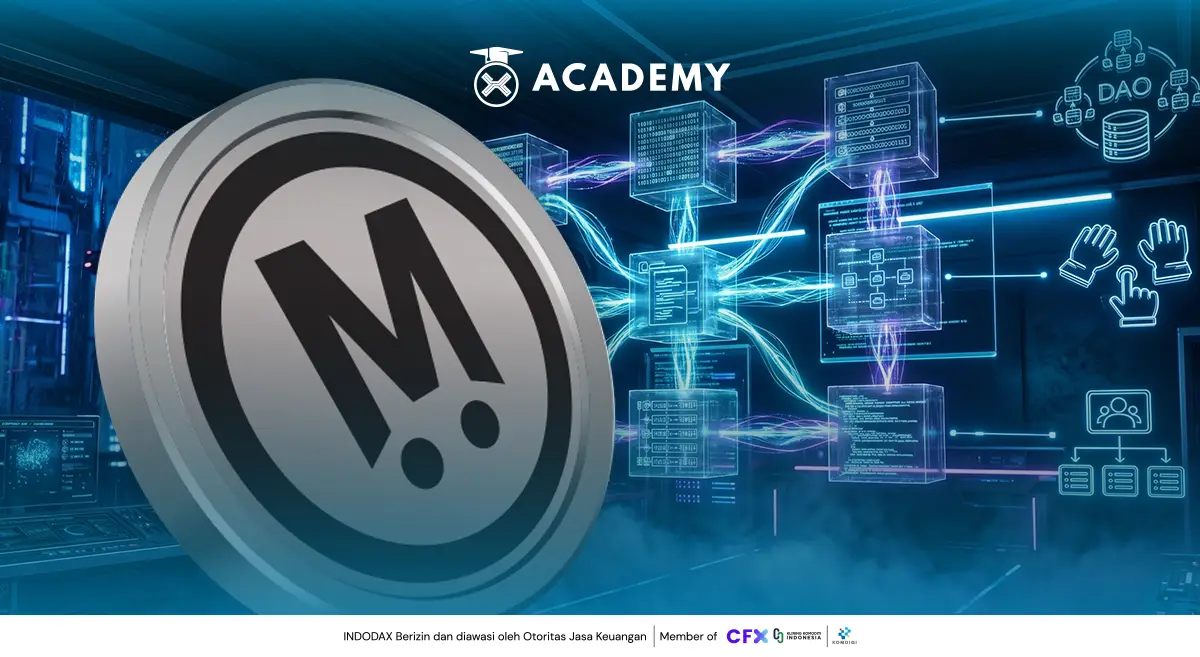
High-speed blockchains are becoming a new focus in the crypto industry as modern Web3 applications require faster and more responsive networks.
MegaETH is one project attracting attention with its real-time blockchain concept and high performance.
However, the success of a blockchain project is determined not only by technology, but also by user adoption, the application ecosystem, active developers, network security, and the sustainability of the token economy.
Currently, MegaETH is still in its early stages of development, so the growth of its ecosystem and network activity still need to be monitored closely.
Conclusion
So, that was an interesting discussion about MegaETH (MEGA) as a real-time blockchain for the Web3 era. You can read more about it in the INDODAX Academy Crypto Academy.
In conclusion, MegaETH arrives at a time when the blockchain industry is starting to move towards a faster, lighter, and more responsive user experience.
While many networks previously focused on basic scalability, MegaETH is trying to push new standards with its real-time blockchain concept aimed at next-generation Web3 applications.
This approach makes MegaETH attractive as market needs are beginning to change.
Applications like on-chain games, social platforms, and real-time trading require networks that are not only secure and decentralized, but also capable of providing instant response like Web2 applications.
However, high performance on paper doesn’t necessarily translate directly to ecosystem success.
In the blockchain industry, factors like developer activity, application quality, number of active users, and network stability often differentiate between long-lasting projects and fleeting buzz.
As it’s still in its early stages of development, MegaETH’s journey is still very open.
Ecosystem development, the ability to maintain network performance, and adoption rates over the next few years will be crucial factors in determining how influential this project will be in the Web3 era.
In addition to gaining in-depth insights through popular crypto education articles, you can also broaden your horizons through a collection of tutorials and choose from a variety of popular articles that suit your interests.
Besides updating your knowledge, you can also directly monitor digital asset prices on Indodax Market, such as Bitcoin (BTC to IDR) or other assets, and stay up-to-date with the latest developments through the latest crypto news. For a more personalized trading experience, explore Indodax’s OTC trading service. Don’t forget to activate notifications so you don’t miss important information about blockchain, crypto assets, and other trading opportunities.
You can also follow our latest news via Google News for faster and more reliable access to information. For an easy and secure trading experience, download the best crypto app from INDODAX on the App Store or Google Play Store.
Maximize your crypto assets with the INDODAX crypto staking feature, a practical way to earn passive income from your stored assets. Register now with INDODAX and easily complete KYC to start trading crypto more safely, conveniently, and reliably!
In practice, asset transparency is now adopted by a number of crypto platforms, one of which is through the publication of Proof of Reserves (PoR) data from third parties like CoinMarketCap. In Indonesia, Indodax is one of the platforms that regularly updates this information for public access.
Indodax Official Contact
Customer Service Number: (021) 5065 8888 | Support Email: [email protected]
Also follow our social media here: Instagram, X, YouTube & Telegram

FAQ
- What is MegaETH (MEGA)?
MegaETH is an Ethereum Layer 2 blockchain designed to deliver real-time transactions with low latency and high throughput. - Is MegaETH an Ethereum Layer 2?
Yes, MegaETH is built as an Ethereum Layer 2 and remains compatible with the EVM (Ethereum Virtual Machine). - What is the function of the MEGA token?
MEGA tokens are used within the MegaETH ecosystem to support network activity, ecosystem utility, and possibly certain incentives. - Why is MegaETH so widely discussed in the crypto community?
MegaETH is widely discussed because it promotes the narrative of a real-time blockchain with high performance targets and a focus on a faster Web3 user experience. - How is MegaETH different from other blockchains?
MegaETH focuses on low latency and a real-time experience, while many other blockchains focus more on general scalability or transaction cost efficiency. - Can Ethereum developers use MegaETH?
Yes, because MegaETH is compatible with the EVM, making it easier for Ethereum developers to build applications. - What are the risks of joining a new blockchain project like MegaETH?
Some of the risks include high volatility, intense industry competition, user adoption challenges, and ever-changing technology developments.
Author: Boy
 Polkadot 2.25%
 BNB 0.52%
 Solana 4.62%
 Ethereum 2.32%
 Cardano 1.02%
 Polygon Ecosystem Token 1.87%
 Tron 2.75%
 Market