Gold has long been known as a hedge against economic uncertainty.
Now, with the advancement of blockchain technology, it’s possible to own gold digitally without the need to store physical gold directly.
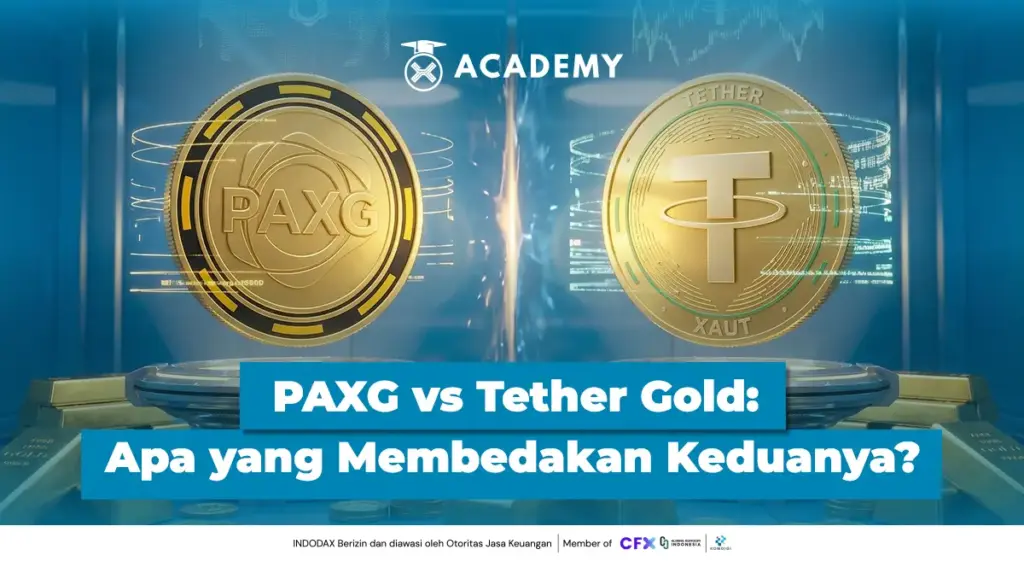
The two largest gold tokens that link gold to digital assets are PAX Gold (PAXG to IDR) and Tether Gold (XAUT).
While both are backed by physical gold, they differ in terms of issuer, regulation, transparency, gold storage, liquidity, and suitable investor characteristics.
In this article, we’ll discuss the differences between PAXG and XAUT to better understand the gold token options available in the digital asset market.
What Are PAXG and Tether Gold?

PAXG and Tether Gold (XAUT) are digital gold tokens whose value is backed by physical gold. Both convert gold ownership into blockchain-based assets. Here’s a brief explanation of each.
What is PAX Gold (PAXG)?
PAX Gold (PAXG) is a gold token from Paxos Trust Company. Each PAXG represents one troy ounce of physical gold and tracks the global gold price. Paxos is licensed by financial regulators, prioritizing transparency of its gold reserves.
What is Tether Gold (XAUT)?
Tether Gold (XAUT to IDR) is a gold token from Tether Gold. Each XAUT also represents one troy ounce of physical gold stored in a Swiss vault. XAUT is a gold token issued by Tether and allows access to digital gold through the blockchain.
Why Are Gold Tokens Increasing in Popularity?
Gold tokens are popular due to the rise of tokenized assets, which are tangible assets in digital form. Gold tokens make it easy to own, move, and trade gold without directly storing physical gold.
PAXG vs. Tether Gold: What’s the Difference Between Their Issuers?
PAXG and Tether Gold are both digital gold tokens, but they are issued by different companies, as explained below.
1. Who’s Behind PAXG?
PAX Gold (PAXG) is issued by Paxos Trust Company, a fintech company specializing in digital assets.
Paxos emphasizes regulatory and compliance aspects, having been licensed by the New York financial regulator. The company also emphasizes the transparency of its gold reserves, which back PAXG.
2. Who’s Behind Tether Gold?
Tether Gold (XAUT) is issued by Tether Limited, the company behind USDT. XAUT is part of the Tether ecosystem, known as one of the largest digital asset issuers in the crypto industry.
3. Why is the Issuer an Important Factor?
The issuer’s reputation influences trust in gold tokens. Transparency, regulation, and reserve management are important factors for investors.
PAXG vs. Tether Gold in Terms of Regulation and Transparency
Regulation and transparency are important factors in gold tokens because the asset’s value depends on the physical gold reserves held by the issuer. Below is a comparison of PAXG vs. Tether Gold in terms of regulation and transparency.
1. PAXG Regulation
PAXG is issued by Paxos Trust Company, which is supervised by the New York Financial Conduct Authority (NYDFS). This oversight helps increase trust because Paxos must adhere to applicable compliance standards.
2. PAXG Transparency
PAXG allows verification of gold details such as serial number, weight, and storage location. Token holders can verify gold details such as serial number, weight, and purity through the Paxos system.
3. Tether Gold Regulation and Transparency
Tether Gold (XAUT) is issued by Tether Limited and is backed by physical gold stored in Swiss vaults. XAUT is backed by gold reserve reports published by Tether.
4. Why is Transparency Important in Gold Tokens?
Transparency ensures that tokens are truly backed by physical assets. The clearer the evidence of gold reserves, the greater the trust in the token.
PAXG vs. Tether Gold in Terms of Gold Storage
PAXG and Tether Gold are both backed by physical gold, but use different storage locations, as explained below.
1. Where is PAXG Gold Stored?
PAXG gold is stored in a Brink’s vault in London. The gold is LBMA-certified bullion with high purity standards.
2. Where is Tether Gold Stored?
Tether Gold (XAUT) is stored in a secure vault in Switzerland. Each XAUT token represents one troy ounce of physical gold.
3. Does Storage Location Matter?
Storage location is important because it relates to security, audit processes, and proof of gold reserves. A trusted vault helps increase trust in gold tokens.
PAXG vs. Tether Gold in Terms of Liquidity and Market Access
In digital assets, liquidity is crucial for fast transactions and competitive pricing. Below is a comparison of PAXG vs. Tether Gold in terms of liquidity and market access.
1. PAXG Liquidity
PAXG is available on various major exchanges. This token is also widely used in the Ethereum DeFi ecosystem, thus achieving fairly broad adoption.
2. Tether Gold Liquidity
Tether Gold (XAUT) has broad market access through the Tether ecosystem and several blockchain networks. The support of the crypto community keeps XAUT trading active.
3. Why is Liquidity Important for Investors?
Liquidity facilitates the process of buying and selling assets. Assets with high liquidity are typically traded faster and closer to market prices.
PAXG vs. Tether Gold in Terms of Fees and Redemption
Fees are an important consideration when choosing a gold token because they can impact investment returns. Below is a comparison of PAXG vs. Tether Gold in terms of fees and redemption.
1. PAXG Fee Structure
PAXG generally follows blockchain transaction fees when transferred. Other fees may arise from trading activities on exchanges or related services. PAXG also supports holdings of smaller fractions, making it more accessible.
2. Tether Gold Fee Structure
Tether Gold (XAUT) has fees associated with blockchain transactions and trading on crypto platforms. Redemption of physical gold is available through Tether services under certain conditions.
3. What Should Investors Consider?
Transaction, storage, and redemption fees can affect the efficiency of long-term investments. Understanding the fee structure helps choose the gold token that best suits your needs.
PAXG vs Tether Gold in Terms of Physical Gold Ownership
Physical gold ownership is one of the key questions when choosing a gold token. PAXG and XAUT are both backed by real gold, but have different mechanisms, which are explained below.
1. Do PAXG Holders Really Own the Gold?
PAXG holders own the physical gold underlying the token. Each PAXG represents one troy ounce of LBMA-certified gold stored in a vault.
2. Do XAUT Holders Really Own the Gold?
XAUT holders also digitally own physical gold. Each XAUT token represents one troy ounce of 99.99% purity gold stored in a Swiss vault.
3. Can Tokens Be Exchanged for Physical Gold?
PAXG and XAUT can be exchanged for physical gold under specific conditions set by the issuer.
However, the redemption process usually has minimum limits and specific requirements, so many users choose to trade tokens on the crypto market.
What are the Risks of PAXG and Tether Gold?
PAXG and Tether Gold offer blockchain-based access to gold, but they still carry risks that need to be understood, including the following.
1. PAXG Risks
PAXG risks are related to Paxos as the issuer. If issues arise with the company or regulations, trust in the token could be impacted. Furthermore, the price of PAXG continues to follow gold movements, so its value can rise or fall.
2. Tether Gold Risks
Tether Gold (XAUT) risks are related to Tether as the issuer and the transparency of its gold reserve management. Changes in market confidence in the issuer can impact the token. XAUT also remains dependent on gold price conditions.
3. Why Understand Risks From the Outset?
Understanding risks helps us understand that gold tokens are not free from potential losses. In addition to profit potential, issuer, regulatory, and market factors need to be considered before making a decision.
Who is Suitable for PAXG?
PAXG is more suitable for investors who want digital gold with a clear and relatively structured basis. This token is issued by Paxos, a US-licensed company, making it more attractive to those prioritizing regulation.
PAXG is also suitable for those prioritizing transparency because each token is backed by physical gold, whose details can be traced, such as serial numbers and gold content.
Furthermore, PAXG is often chosen by conservative investors who want to track gold price movements without having to store physical gold, but rather through a simpler digital asset.
PAXG vs. Tether Gold: What Differentiates These Two Gold Tokens?
PAXG and Tether Gold (XAUT) both represent physical gold on the blockchain, so their value follows the global gold price.
The main differences lie in their issuers and approaches. PAXG is issued by Paxos, with a focus on regulation and transparency of gold details.
Meanwhile, Tether’s XAUT emphasizes ease of access and flexibility of use across blockchains.
In terms of storage and operations, PAXG tends to be more transparent in gold tracking, while XAUT is simpler in accessing digital gold ownership.
The two are not direct competitors, but rather two different options for the same goal: gaining exposure to physical gold through digital assets.
What Can Investors Learn from PAXG and Tether Gold?

PAXG and Tether Gold demonstrate that asset tokenization allows digital gold ownership without the need for physical storage.
The important thing to consider is not only the token price, but also the underlying asset, namely the physical gold that forms the basis of its value.
Furthermore, factors such as regulation, transparency of gold management, and liquidity are just as important as price movements in assessing the quality of a gold token.
Conclusion
So, that was an interesting discussion comparing PAXG vs. Tether Gold and some of the differences between these two gold tokens. In addition to gaining in-depth insights through various popular crypto education articles, you can also broaden your horizons through a collection of tutorials and choose from a variety of popular articles that suit your interests.
Besides updating your knowledge, you can also directly monitor digital asset prices on Indodax Market, such as Bitcoin (BTC to IDR) or other assets, and stay up-to-date with the latest crypto news. For a more personalized trading experience, explore Indodax’s OTC trading service. Don’t forget to activate notifications so you don’t miss out on important information about blockchain, crypto assets, and other trading opportunities.
You can also follow our latest news via Google News for faster and more reliable information. For an easy and secure trading experience, download the best crypto app from INDODAX on the App Store or Google Play Store.
Maximize your crypto assets with the INDODAX crypto staking feature, a practical way to earn passive income from your stored assets. Register now with INDODAX and easily complete KYC to start trading crypto more safely, conveniently, and reliably!
Official Indodax Customer Service Contact
Official Customer Support Number: (021) 5065 8888
Official Indodax Priority Customer Service Number: (021) 5036 8888
Help email: [email protected]
Also follow INDODAX on social media here: Instagram, X, YouTube & Telegram

FAQ
- What are the main differences between PAXG and Tether Gold?
The main differences between PAXG and Tether Gold (XAUT) lie in their issuer, regulation, transparency, gold storage location, and operational structure. PAXG is issued by Paxos Trust Company, which is regulated by New York regulators, while XAUT is issued by Tether Gold. Both are backed by physical gold, but have different approaches to compliance and transparency. - Are PAXG and Tether Gold truly backed by physical gold?
Yes, PAXG and Tether Gold are both physical gold-backed tokens. Generally, one token represents one troy ounce of physical gold stored in a professional safekeeping vault. The token’s value typically follows global gold price movements. - Which is more transparent, PAXG or Tether Gold?
PAXG is often considered more transparent because it provides a tracking mechanism that allows investors to check the details of the gold backing their tokens. Meanwhile, Tether Gold also provides gold reserve information, but its approach to transparency and reporting differs. - Are the prices of PAXG and Tether Gold always the same?
Although both follow global gold prices, they are not always the same. Small differences can occur due to market liquidity, trading volume, exchange spreads, and the supply and demand of each token. - Why do investors choose gold tokens over buying physical gold?
Gold tokens offer easy transactions, storage, and transfers without the need to store physical gold directly. Investors can also buy or sell gold tokens through crypto asset platforms, with a faster process than traditional physical gold transactions. - Are PAXG and Tether Gold stablecoins?
Both fall into the asset-backed token or commodity-backed token category. Unlike stablecoins pegged to fiat currencies like USDT or USDC, PAXG and XAUT are pegged to the value of physical gold. - Can PAXG and Tether Gold tokens be exchanged for physical gold?
Under certain conditions, tokens can be exchanged for physical gold according to the terms and conditions set by the issuer. However, there is usually a minimum redemption amount, certain fees, and procedures that token holders must comply with. - What are the risks of investing in gold tokens like PAXG and Tether Gold?
The main risks include gold price fluctuations, issuer risk, regulatory changes, market liquidity, and operational risk. Although backed by physical gold, the token’s price can fluctuate based on market conditions and investor sentiment.
Author: Boy
 Polkadot 2.25%
 BNB 0.52%
 Solana 4.62%
 Ethereum 2.32%
 Cardano 1.02%
 Polygon Ecosystem Token 1.87%
 Tron 2.75%
 Market