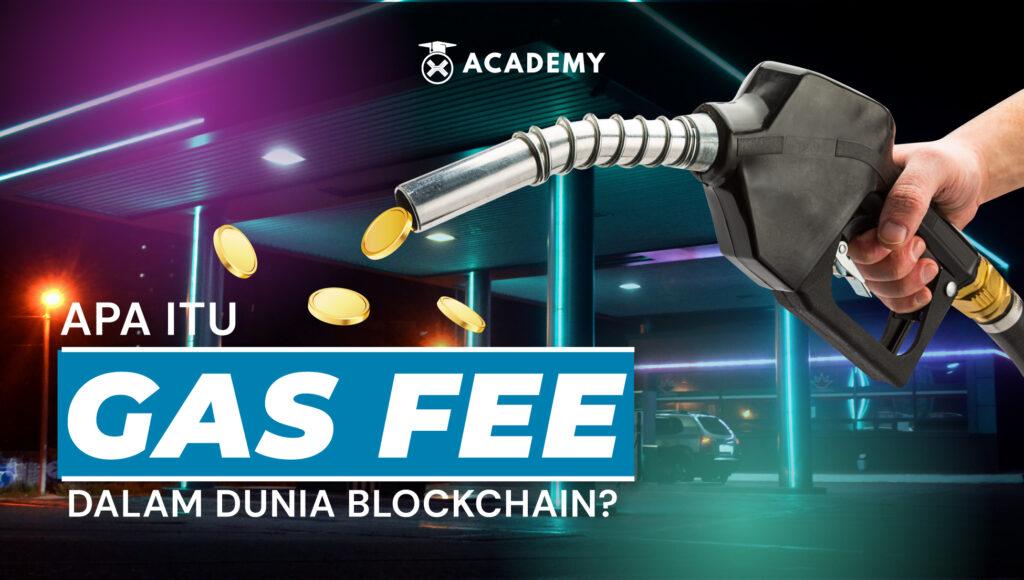
Have you ever heard of the term gas fee in blockchain?
A fee is charged to users of certain blockchain protocols when they wish to perform or process blockchain functions.
Hey, back at INDODAX Academy with Fay!
This time, I want to discuss blockchain and crypto assets, namely gas fees!
So, to get all other interesting information, remember to subscribe to this channel, OK?
As Fay mentioned earlier, the gas fee is charged to blockchain users.
Gas alone serves as an incentive for network validators to record transactions accurately in the maintenance of the protocol.
Why is it Called a Gas Fee?
The term gas is taken from its similarity in cost to the fuel that will keep the vehicle running.
This gas fee is calculated in gas units where this gas is a quantitative measure for processing blockchain transactions.
The term “gas fee” is used with Ethereum and Polygon, while other blockchains, such as Solana and Bitcoin, use the term “transaction fee.”
Each transaction has a different amount of gas. Depending on the complexity, the more complicated the transaction or smart contract, the more gas will be issued.
The gas fee depends on the volume of demand and supply, so the gas fee is very volatile.
When the demand is high, the gas fee will increase, while the gas fee will also decrease if the demand is low.
To solve the gas fee problem, there are several solutions.
One of them is increasing the scalability of the blockchain network by increasing transactions which will reduce gas fees.
So, you can do this method using layer two or sidechain, using transactions outside the leading network, then processing them in one group.
With this, you can significantly reduce gas fees and increase network efficiency.
There are more tips for you as a user to reduce gas fees.
- Avoid making transactions during peak hours because high demand during peak hours causes the gas fee also to increase.
- Use layer two or a sidechain to process transactions.
- Optimize transactions by using a more efficient amount of gas.
So, that was a discussion about gas fees and how to reduce them.
Hopefully, with the development of blockchain technology, gas fee fees will also be reduced, and the blockchain network can become more efficient and accessible for everyone.
 Polkadot 2.25%
 BNB 0.30%
 Solana 4.19%
 Ethereum 2.32%
 Cardano 1.02%
 Polygon Ecosystem Token 1.87%
 Tron 2.75%
 Market