
Almost everyone has created an account online. From social media to various applications, we’re almost always asked to enter a username, though we rarely think about its purpose.
On the internet, usernames serve as a means of identification. However, when it comes to crypto, identifying “who you are” no longer relies on such names.
In this article, we’ll understand digital identity from the basics, including why the way we “introduce ourselves” in the crypto world is so different.
What Does a Username Mean?
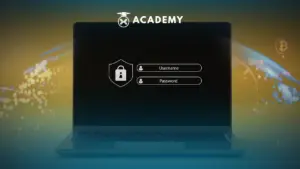
A username is a unique identifier used when someone creates and accesses an account on a digital system.
A username serves to distinguish one account from another on a platform, allowing the system to recognize who is logged in and grant appropriate access.
Unlike a real name, a username is usually chosen by the user and does not have to reflect their personal identity, as long as it is unique and not already used by another user.
Why Are Usernames Needed on Digital Platforms?
In everyday use, usernames almost always appear when creating an account. Here are some reasons why usernames are needed on digital platforms.
1. As User Identity
A username serves as the primary identity that distinguishes one account from another on a platform.
Because it is unique, the system can identify who is logged in, what data is associated with that account, and what role they hold. Without this identity, the system would have no way to function in a structured manner.
2. As Account Access
In practice, a username is always paired with a password. The combination of the two provides the gateway to a user’s account.
The username tells the system which account to access, while the password ensures that the person attempting to log in is the owner. Without a username, the login process cannot be executed correctly.
3. Facilitates Interaction and Search
Usernames are also displayed publicly in profiles, comments, forums, and search results. From there, other users can recognize, mention, or find an account more easily.
This function simplifies interactions without the need to reveal personal identification such as real names or email addresses.
Examples of Username Use in Everyday Life
Below are examples of username usage that are easily encountered in everyday activities across various digital services.
1. Usernames in Email and Social Media
When creating an email account, users are asked to select a username, which is part of the email address. This username is then used every time they send or receive messages.
On social media, a username serves as an account identifier that others can see, for example in profiles, comments, or search fields.
It’s important to distinguish that a username is not always the same as a display name, as display names can be changed and don’t have to be unique.
2. Usernames in Apps and Websites
Use of usernames is also common in various apps and websites, such as marketplaces, forums, or other digital services.
In this context, one person can have multiple different usernames, depending on the platform used. Each username serves to distinguish one account from another, even if they belong to the same person.
General Username Rules You Need to Know
When creating an account, there are several basic rules regarding usernames that are often overlooked.
In fact, this rule is directly related to how the system works and also to account security. Here are some general things you need to know about usernames.
1. Usernames Must Be Unique
Every platform requires unique usernames, meaning no two accounts can have the same username on the same system. This rule is necessary so the system can clearly distinguish one user from another.
If a username is already in use, the system will automatically reject it and ask you to choose another one. Without this uniqueness, account identification will not be effective.
2. Usernames Are Not the Only Security
Usernames are not confidential information. In fact, in many cases, usernames can be seen by others, for example in profiles or comments.
Account security does not depend on the username, but rather on the password and other security layers used by the platform.
Therefore, although the username serves as identification, the primary protection for an account remains the password and its supporting security system.
So, Are Usernames Used in Crypto?
So, are usernames also used in crypto? Well, this is where the differences begin to emerge.
In blockchain-based systems, no accounts are created with usernames, as is typical on digital platforms. The blockchain network does not store user data in the form of names or profiles.
Identity in crypto is determined by wallet ownership. As long as someone controls the wallet, they are considered its owner by the system.
Therefore, user recognition no longer relies on usernames, but rather on proof of ownership recorded on the blockchain.
The Difference Between Usernames on the Internet and Identity on the Blockchain
To understand the difference, it’s important to look at how identity works on the internet in general and on the blockchain. Both are used to identify users, but they work differently.
Here are the important differences between usernames on the internet and identity on the blockchain.
Identity on Centralized Platforms
On centralized platforms, user identity is established through username-based accounts. Usernames and account data are stored and managed by the platform.
Account access is entirely dependent on the system, including login rules, account recovery, and access restrictions that can be implemented at any time.
Identity on the Blockchain
On the blockchain, there are no username-based accounts. Identity is represented by a wallet address recorded on the network. Ownership of an asset is determined by who holds the private key to that wallet.
As long as the private key is held, control of the asset remains with the owner, without relying on a central authority.
Why Doesn’t Blockchain Use Usernames?

Blockchain is not designed to recognize names or identities in the form of usernames. This system is built on cryptography, not an account database like most digital platforms.
Therefore, what is needed is not a username, but rather mathematical proof that can be verified by the network.
On blockchain, ownership is proven through control of a private key, not through a human-readable identity. As long as the proof of ownership is valid, the network will accept transactions without needing to know the user’s identity.
All activity is verified collectively by the network, so trust does not rely on a single party or specific account system.
Conclusion
So, that was an interesting discussion about the meaning of usernames, their functions, examples, and differences in crypto, which you can read more about in the Crypto Academy at INDODAX Academy.
In conclusion, a username is essentially a user name used by a digital system to recognize and manage an account.
This concept is crucial on the internet and various centralized applications because almost all access and interaction relies on the username as the account identity.
However, when it comes to crypto, the perspective on identity begins to change. User recognition no longer relies on names, but on wallets and cryptographically proven asset ownership.
This distinction demonstrates that crypto is not just a new technology, but also brings a new approach to identity and control.
Ultimately, understanding this difference in perspective is an important first step before truly diving into the crypto ecosystem.
In addition to gaining in-depth insights through popular crypto education articles, you can also broaden your horizons through a collection of tutorials and choose from a variety of popular articles that suit your interests.
Besides updating your knowledge, you can also directly monitor digital asset prices on Indodax Market and stay up-to-date with the latest crypto news. For a more personalized trading experience, explore Indodax’s OTC trading service. Don’t forget to activate notifications so you don’t miss out on important information about blockchain, crypto assets, and other trading opportunities.
You can also follow our latest news via Google News for faster and more reliable access to information. For an easy and secure trading experience, download the best crypto app from INDODAX on the App Store or Google Play Store.
Maximize your crypto assets with the INDODAX Earn feature, a practical way to earn passive income from your stored assets. Register now with INDODAX and easily complete KYC to start trading crypto more safely, conveniently, and reliably!
Indodax Official Contact
Customer Service Number: (021) 5065 8888 | Support Email: [email protected]
Also follow us on social media here: Instagram, X, Youtube & Telegram
FAQ About Usernames and Crypto
- What is the difference between a username and a wallet address?
A username is an account identifier on a digital platform, while a wallet address identifies asset ownership on the blockchain - Do all crypto applications not use usernames?
Pure blockchains don’t use usernames, but centralized platforms can still use them for account purposes. - Why do wallet addresses look long and complicated?
Because wallet addresses are cryptographically generated to maintain uniqueness and security - Can usernames be changed?
On many digital platforms, usernames can be changed according to each service’s policy.

[alert style=”warning”] DISCLAIMER: All forms of crypto asset transactions carry risks and the potential for loss. Always invest based on independent research to minimize the level of loss of crypto assets traded (Do Your Own Research/ DYOR The information contained in this publication is provided on a general basis without obligation and is for informational purposes only. This publication is not intended to be, and should not be considered, an offer, recommendation, solicitation, or advice to buy or sell any investment product and may not be transmitted, disclosed, copied, or relied upon by anyone for any purpose. [/alert]
Author: Boy
 Polkadot 2.25%
 BNB 0.52%
 Solana 4.62%
 Ethereum 2.32%
 Cardano 1.02%
 Polygon Ecosystem Token 1.87%
 Tron 2.75%
 Market