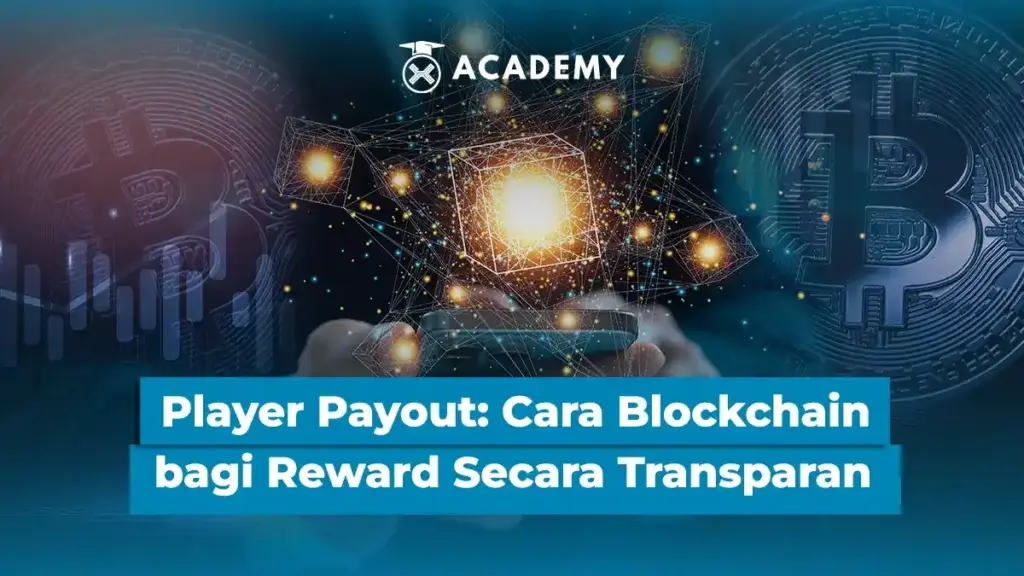
On various modern digital platforms and games, reward distribution often doesn’t run as smoothly as promised. Some players have to wait long periods, while others are confused by the lack of transparency in reward calculations.
In reality, everything depends on a single administrator. This situation makes rewards lose their meaning as a form of appreciation.
Because of this problem, the concept of player payout has begun to emerge as a more measurable reward distribution mechanism and is being adopted within the blockchain ecosystem, with an emphasis on process clarity and the minimal role of intermediaries.
What is Player Payout?

Player payout refers to the mechanism for distributing rewards to players or participants for their involvement on a platform. Simply put, player payout regulates the flow of reward distribution from the organizer to the players based on predetermined rules.
This term describes how rewards are allocated and distributed by the system, not the amount received.
Participation, achievements, or specific results trigger the system to distribute rewards in a structured and consistent manner. The primary focus is on the distribution mechanism, not the financial outcome.
The concept of player payout is often found in digital and gaming platforms, including online games and performance-based competitions.
In these ecosystems, payouts play a role in maintaining the regularity of reward distribution so that players understand how the system works and the basis for its distribution.
Why Player Payout Is an Issue in Traditional Systems
Traditional payout systems are problematic because they rely on manual processes for calculating and distributing rewards.
The lengthy process and reliance on administrative work often delay distribution, especially as the number of players or participants increases.
Payout management is also centralized within the operator or platform. All data and decisions are held by one party, while players only receive the final results without visibility into the process.
This dependency makes it difficult for players to ensure that payouts are distributed consistently and fairly. Furthermore, limited transparency increases the potential for misunderstandings and disputes.
When the basis for calculations cannot be clearly traced, trust is easily undermined.
This situation then became the basis for the emergence of a blockchain-based approach, which offers a reward distribution mechanism with a clearer structure and traceability.
The Role of Blockchain in the Player Payout System
Blockchain acts as an open record system that stores the entire player payout process permanently and traceably.
Every reward distribution is recorded as is, so the payout flow is not solely dependent on the platform’s internal records.
This openness makes transactions and reward distribution more transparent. Players can understand how payouts are executed and ensure the process follows established rules.
Immutable records also help maintain trust because they are difficult to change unilaterally.
Furthermore, blockchain reduces reliance on third parties. Reward distribution can be executed directly by the system through an automated mechanism, eliminating the need for numerous intermediaries.
This pattern makes player payouts more efficient, structured, and easy to understand as a reward distribution mechanism.
How Do Player Payouts Work on the Blockchain?
Player payouts on the blockchain occur after an activity or event is completed. Match results or player achievements serve as the primary reference for initiating the reward distribution process.
Payout rules are established from the outset, including who is entitled to receive rewards and how they are distributed. These provisions form the basis for the system’s payout execution, ensuring no changes to the rules mid-process.
When conditions are met, reward distribution is processed directly through the blockchain network. The system executes the distribution according to the established rules without manual involvement, and each process is publicly recorded.
This process ensures that player payouts are more organized, easily traceable, and independent of intermediaries.
The Role of Smart Contracts in Reward Distribution
Smart contracts act as a set of automated rules that govern reward distribution. All payout conditions are predetermined and executed by the system according to agreed-upon conditions.
Because these rules are executed directly by the system, the payout process requires no manual intervention.
When conditions are met, reward distribution occurs automatically without waiting for approval or additional administrative processes.
This pattern creates consistency and certainty in every payout. All players follow the same rules, and distribution results always adhere to a predetermined scheme.
Automation through smart contracts makes the reward process more stable, measurable, and independent of individual actions.
Player Payout Transparency in the Web3 Ecosystem
One of the main advantages of player payouts in the Web3 ecosystem lies in data transparency.
Information related to reward distribution is recorded in a publicly verifiable network, so the payout process is no longer secretive or known only to platform administrators.
This transparency makes reward distribution rules clearer. Players can understand the distribution basis and track whether payouts are executed according to the established rules.
Clarity of the rules also helps reduce assumptions or one-sided interpretations of the distribution process.
With a traceable recording mechanism, the potential for manipulation is also reduced. Every change or transaction is recorded as is and is difficult to change unilaterally.
This approach places transparency as part of the system, rather than merely a promise from the platform, so player payouts can be more organized and trustworthy.
Player Payouts in Blockchain-Based Games and Web3
In blockchain-based games and Web3 platforms, player payouts form part of the mechanism that connects player activity to the reward distribution system.
This concept is widely used in GameFi and various Web3 applications to ensure that every player’s participation or contribution is recorded and responded to by the system.
Players are positioned not only as end users, but also as participants in the ecosystem.
Every specific activity, achievement, or role becomes part of a flow processed by the payout system, creating a more structured relationship between players and the platform.
Rewards, in this context, serve as an incentive mechanism, not a promise of specific results. Payouts are designed to encourage engagement and maintain ecosystem balance, with established rules from the outset.
This distribution model allows player payouts in GameFi and Web3 to be better understood as role- and activity-based distribution systems, rather than simply a means of generating profits.
Risks and Things Users Need to Understand
While player payouts on the blockchain offer transparency and automation, the mechanism still relies on rules embedded in smart contracts.
Each reward distribution is executed according to pre-programmed logic and parameters, so manual changes cannot be made mid-process.
Players need to be aware that this system operates precisely according to the established rules, with no tolerance for error or interpretation.
Another risk arises if the smart contract or payout mechanism is flawed in design. Mistakes in the code or distribution rules could result in rewards not being distributed as expected.
This demonstrates that even though the system is automated, there are still potential technical issues that must be addressed. Therefore, understanding how the payout mechanism works before participating is crucial.
Players who understand the rules and distribution flow can manage expectations and anticipate risks, ensuring safe participation and a balanced payout ecosystem.
Differences Between Player Payouts in Web2 and Web3
In the Web2 ecosystem, player payouts are generally centralized. All control rests with the platform or operator, so players only receive the final results without full visibility into the distribution process.
Transparency is also limited because payout records are typically stored in internal databases that are difficult for the public to access, and the process is often manual, requiring administrative intervention or operator approval.
In contrast, in Web3, reward distribution is decentralized. Control does not reside in a single party but is executed through a system that can be verified by all participants.
Transactions and payouts are publicly recorded on the blockchain network, making the process more transparent and traceable.
Furthermore, an automated mechanism through smart contracts ensures that rewards are distributed directly according to established rules, without manual intervention.
This working method emphasizes openness, consistency, and clarity at every payout step.
Why Understanding Player Payouts is Important for Crypto Users

For users who want to better understand the blockchain ecosystem, player payouts are an essential part of Web3 literacy.
Understanding the reward distribution mechanism helps players see how the system works, rather than simply focusing on the results received.
This knowledge allows users to assess the transparency, consistency, and rules applicable to the platform, allowing them to participate more consciously and with clear insights.
By understanding the concept of player payouts, users can be more confident when exploring the blockchain ecosystem and understand their role in the reward distribution mechanism.
Conclusion
So, that was an interesting discussion about player payouts as a blockchain method for distributing rewards transparently. You can read more about this in the INDODAX Academy Crypto Academy.
In conclusion, blockchain makes reward distribution clearer and more visible.
All transactions are recorded openly, so players can transparently understand the rules and flow of reward distribution. This makes the process fairer and reduces the risk of misunderstandings.
The automated system also ensures consistent payouts without the need for human intervention, ensuring that rewards are received according to predetermined rules.
By understanding how payouts work before playing, players can be more aware of their role, know what to expect, and play more safely and comfortably.
In addition to gaining in-depth insights through popular crypto education articles, you can also broaden your horizons through a collection of tutorials and choose from a variety of popular articles that suit your interests.
Besides updating your knowledge, you can also directly monitor digital asset prices on Indodax Market and stay up-to-date with the latest crypto news. For a more personalized trading experience, explore Indodax’s OTC trading service. Don’t forget to activate notifications so you don’t miss out on important information about blockchain, crypto assets, and other trading opportunities.
You can also follow our latest news via Google News for faster and more reliable access to information. For an easy and secure trading experience, download the best crypto app from INDODAX on the App Store or Google Play Store.
Maximize your crypto assets with the INDODAX Earn feature, a practical way to earn passive income from your stored assets. Register now with INDODAX and easily complete KYC to start trading crypto more safely, conveniently, and reliably!
Indodax Official Contact
Customer Service Number: (021) 5065 8888 | Support Email: [email protected]
Also follow us on social media here: Instagram, X, Youtube & Telegram
FAQ
- What is player payout on the blockchain?
Player payout on the blockchain refers to a mechanism for rewarding players or users who participate in a Web3-based ecosystem.These rewards are distributed through a blockchain system so that the recording, distribution, and ownership processes are not entirely controlled by a single centralized party.
- Are player payouts always in the form of crypto tokens?
Not always. Player payouts are often associated with crypto tokens, but in practice, the rewards can take various forms.Some can take the form of utility tokens, NFTs, on-chain points, or specific access rights within the ecosystem, depending on the platform’s design and objectives.
- Why does blockchain make player payouts more transparent?
Because every payout process is recorded on the public blockchain network. Transaction data can be viewed and verified by anyone, making the reward distribution flow more transparent and difficult to unilaterally alter once recorded. - Are player payouts on the blockchain risk-free?
Not entirely. Although blockchain systems offer transparency and automation, risks remain.These risks can stem from smart contract bugs, changes in platform rules, asset value fluctuations, and even user misunderstanding of how Web3 systems work.
- Are player payouts unique to blockchain-based games?
No. The concept of player payouts is also used in various other Web3 ecosystems, such as DeFi platforms, decentralized social applications, community incentive programs, and participation-based reward systems, not just games.

Author: Boy
 Polkadot 2.25%
 BNB 0.52%
 Solana 4.62%
 Ethereum 2.32%
 Cardano 1.02%
 Polygon Ecosystem Token 1.87%
 Tron 2.75%
 Market