The Evolution of AI in Blockchain: An Introduction to Allora (ALLO) Token The development of Artificial Intelligence (AI) is not only changing the way humans work but is also beginning to be utilized in blockchain technology. Various Web3 projects are now using AI to analyze data, automate processes, and generate more accurate predictions.
One such project is Allora, a Decentralized AI project that allows various AI models to contribute to one another, generate predictions, and earn incentives based on the quality of their results.
Unlike conventional AI, which is managed by a single company, Allora utilizes blockchain so that the process of collecting, evaluating, and distributing intelligence occurs in a more open and decentralized manner.
What is the Allora (ALLO) Token?
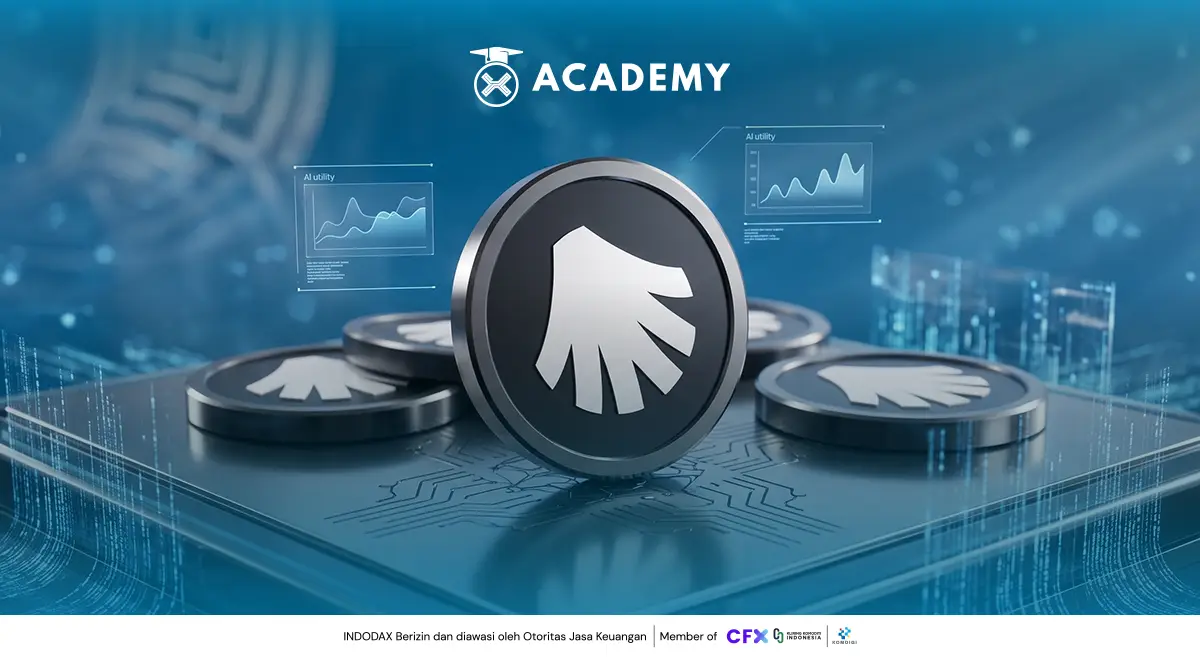
The Allora (ALLO) token powers a decentralized AI network that integrates blockchain technology to generate predictions through the collaboration of various machine learning models. The project was developed as an alternative to conventional AI—which is generally managed centrally—with the goal of creating a more open and transparent AI ecosystem.
Allora champions the concepts of Decentralized AI and Collective Intelligence, combining the contributions of multiple AI models to produce more accurate predictions that continuously improve over time. Within its ecosystem, the ALLO token is used for incentives, governance, and network transactions.
Allora’s vision is to build a decentralized intelligence infrastructure for the Web3 ecosystem, allowing various applications to access AI predictions that are open, transparent, and independent of any single service provider.
Why Does Blockchain Need Decentralized AI Technology?
Many AI systems still rely on centrally managed data and algorithms. This limits transparency, makes results difficult to verify, creates dependency on a single provider, and restricts collaboration among different AI models.
Through blockchain, the concept of decentralization, and smart contracts, AI can be developed more openly. Various AI models can collaborate, their results can be more easily verified, and the entire process can run automatically without relying on a central authority.
How Does Allora Work?
Simply put, Allora works by having various AI models generate inferences or predictions for a specific topic. These predictions are then sent to the Allora network to be evaluated based on their accuracy.
Once the evaluation process is complete, top-performing contributors receive rewards in the form of ALLO tokens. The best predictions are then combined into collective intelligence, which can be utilized by various Web3 applications to support analysis and decision-making.
Unlike conventional AI that relies on a single model, Allora crowdsources the contributions of many AI models to yield much more accurate predictions.
Technologies Used by Allora
Allora’s technology blends AI and blockchain to build an open prediction network. Key components include:
-
Decentralized Intelligence Network: A decentralized network that allows multiple AI models to contribute without relying on a central party.
-
Collective Intelligence: The aggregation of results from various AI models to produce highly accurate predictions.
-
AI Inference: The process where AI generates predictions from data. In Allora, every prediction is collected and evaluated before use.
-
Machine Learning: AI models in Allora use machine learning to continuously learn and improve prediction accuracy based on available data.
-
Blockchain Consensus: Blockchain helps record the evaluation process, reputation, and incentive distribution transparently, making all activities fully auditable.
Functions of the ALLO Token
The ALLO token has several critical functions to support operations and activities within the ecosystem:
-
Governance: ALLO is used to participate in decision-making regarding network development.
-
Staking: Tokens can be staked to support the operation and security of the ecosystem according to protocol rules.
-
AI Contributor Incentives: Contributors who generate high-quality AI predictions are rewarded with ALLO tokens.
-
Ecosystem Transactions: ALLO is used to facilitate various transactions and services within the network.
As the protocol evolves, the utility of the ALLO token may continue to expand through new features and services.
Allora (ALLO) Tokenomics
Understanding tokenomics is important before investing because it can provide an overview of a project’s token supply and valuation.
According to data from CoinMarketCap on Wednesday (July 22nd), Allora has a total supply of approximately 785,490,000 ALLO, a maximum supply of 1,000,000,000 ALLO, and a circulating supply of approximately 200,500,000 ALLO.
Meanwhile, its market cap is around US$90,300,000, with a fully diluted valuation (FDV) of approximately US$450,300,000.
In addition to looking at the number of tokens in circulation, understanding market cap and FDV also helps assess a project’s current valuation and its potential valuation once the entire token supply is in circulation.
What Are the Benefits of Allora for the Web3 Ecosystem?
Allora can be used to analyze blockchain data, support AI in the Decentralized Finance (DeFi) sector, and serve as a prediction engine for AI Agents and various AI-based applications. The technology also helps automate decision-making and supports Web3 application development.
Furthermore, Allora can be integrated with various blockchain protocols, allowing AI services to be utilized in a more open, transparent, and decentralized manner.
How is Allora Different from Other Blockchain AI Projects?
Generally, many blockchain AI projects focus on developing standalone AI models, computing power, or data storage. Allora, however, is building an intelligence network that enables multiple AI models to contribute, be evaluated, and receive incentives based on output quality.
Through this approach, Allora isn’t just running an AI model; it focuses on collective intelligence collaboration to generate superior predictions.
Advantages of Allora
Allora offers several advantages through its decentralized approach:
-
Promotes Open AI: Creates a more open ecosystem that isn’t dependent on a single company.
-
Supports Multi-Model Collaboration: Allows multiple AI models to contribute, resulting in better predictions than a single model could achieve.
-
Blockchain-Based Transparency: Ensures all data, reputation, and rewards are recorded consistently and transparently.
-
Incentivizes Contributors: Rewards network participants fairly based on the quality of their predictions.
-
Powers Web3 Applications: Can be utilized by diverse Web3 applications needing AI services, from data analysis to prediction systems.
Risks and Challenges
Like other blockchain projects, Allora faces challenges such as the broader adoption of decentralized AI, competition from other AI blockchain projects, the need for high-quality data, and network scalability. Furthermore, evolving AI regulations and cryptocurrency market volatility can impact ecosystem growth.
Future Prospects
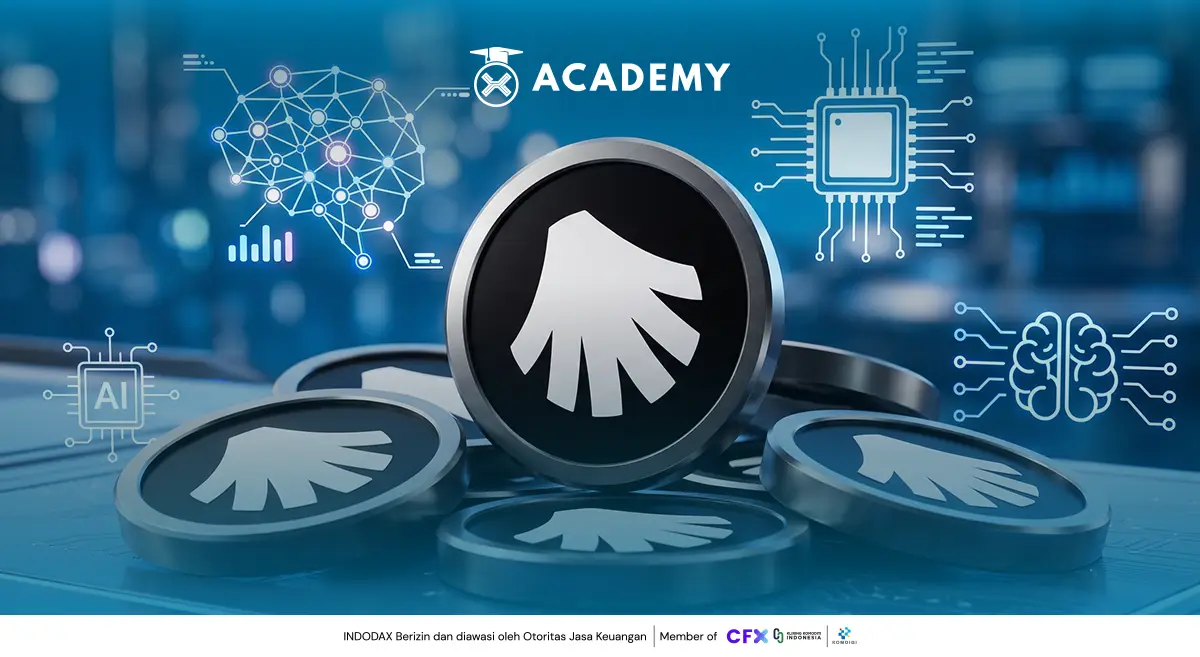
Allora’s growth will be heavily influenced by the increasing use of AI within the Web3 ecosystem, including the rising demand for predictions, data analysis, and automation via AI Agents.
The concepts of decentralized machine learning and collective intelligence open up opportunities for even more AI models to collaborate. Furthermore, cross-chain integrations could massively expand the use of this technology across various Web3 applications.
Conclusion
Allora (ALLO) demonstrates how blockchain technology and artificial intelligence can be merged to build a more open AI system. Through Decentralized AI, collective intelligence, and its token-based incentive mechanism, Allora allows various AI models to contribute, be evaluated, and evolve within a single network.
The true value of Allora lies not just in the ALLO token, but in the intelligence network infrastructure it is building. The ability to connect diverse AI models, generate contextual predictions, and support Web3 applications is a crucial part of its ecosystem’s future.
While it faces challenges regarding adoption, scalability, and regulation, this innovative blend of AI and blockchain showcases how smart systems will be developed and utilized in the future.
Stay Updated with Indodax Academy
That concludes our deep dive into the Allora (ALLO) Token and its decentralized AI ecosystem. You can explore more fascinating crypto insights and tutorials by checking out the popular educational articles at Indodax Academy.
Beyond expanding your knowledge, you can track real-time digital asset prices on the Indodax Market—such as Bitcoin (BTC to IDR)—and follow the latest crypto news.
For a more personalized trading experience, explore Indodax’s OTC trading services. Don’t forget to turn on notifications so you never miss out on important blockchain updates, crypto assets, and trading opportunities. You can also follow our latest news via Google News.
For an easy and secure trading experience, download the best crypto app from INDODAX on the App Store or Google Play Store. Maximize your crypto assets with the INDODAX Staking Crypto feature, a practical way to earn passive income from your stored assets.
Register on INDODAX today and easily complete your KYC to start trading crypto safely, comfortably, and reliably!
Official Indodax CS Contacts:
-
Official Customer Support Number: (021) 5065 8888
-
Official Priority CS Number: (021) 5036 8888
-
Support Email: [email protected]
Follow INDODAX on Social Media: Instagram, X, Youtube & Telegram

FAQ
1. What is Allora (ALLO)? Allora is a blockchain project developing Decentralized AI technology to allow various artificial intelligence models to collaborate, generate predictions, and earn incentives based on the quality of their output.
2. What is the function of the ALLO token? The ALLO token supports activities in the Allora ecosystem, such as staking, governance, incentivizing network contributors, and providing other utilities that will grow as the protocol develops.
3. What is Decentralized AI? Decentralized AI is an approach that combines blockchain technology with artificial intelligence so that the development, evaluation, and distribution of AI results do not rely on a single entity, but instead involve a more open and transparent network.
4. How does Allora work? Allora allows various AI models to submit predictions (inferences) to the network. The network then evaluates the quality of these results so that top-performing models receive incentives, while the resulting intelligence is utilized by Web3 applications.
5. What are the benefits of Allora for the blockchain ecosystem? Allora can support blockchain data analysis, AI Agent development, DeFi applications, prediction markets, and various other Web3 services that require open, transparent, and verifiable AI outputs.
6. How is Allora different from other AI blockchain projects? Unlike many projects that focus purely on providing AI models or computing infrastructure, Allora builds a decentralized intelligence network that allows multiple AI models to collaborate, be evaluated, and be incentivized based on outcome quality.
Author: Boy
DISCLAIMER: All forms of cryptocurrency transactions carry risks and the potential for financial loss. Always invest based on independent research to minimize the risk of losing the traded crypto assets (Do Your Own Research/ DYOR). The information contained in this publication is provided for general informational purposes only, without obligation. This publication is not intended to be, and should not be considered as, an offer, recommendation, solicitation, or advice to buy or sell any investment product, and must not be forwarded, disclosed, copied, or relied upon by any person for any purpose.
 Polkadot 2.25%
 BNB 0.30%
 Solana 4.19%
 Ethereum 2.32%
 Cardano 1.02%
 Polygon Ecosystem Token 1.87%
 Tron 2.75%
 Market