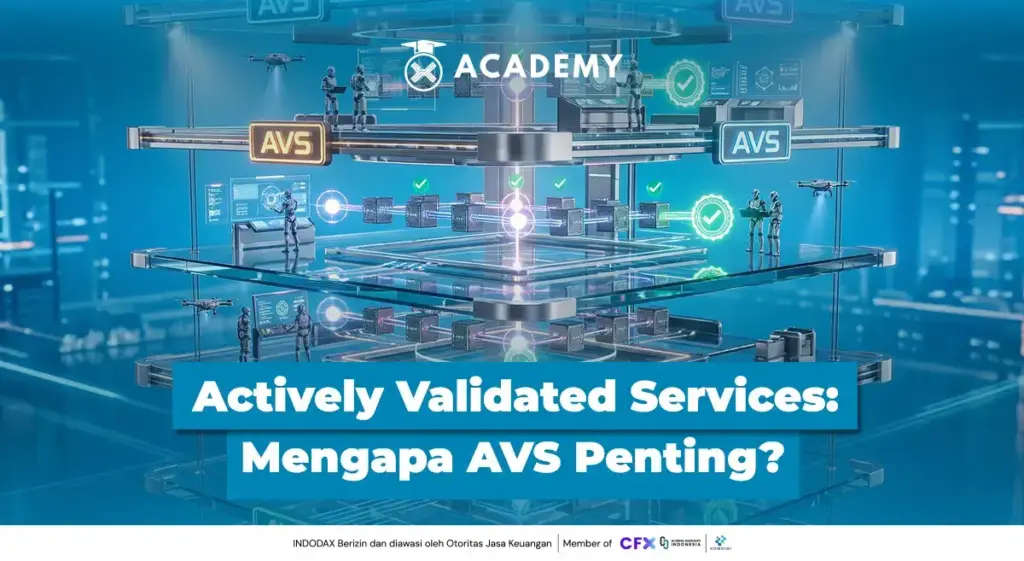
Building a new blockchain or decentralized service isn’t just about introducing technology. The network must also maintain security through validators, consensus mechanisms, and strong economic capital.
Before Actively Validated Services (AVS), many projects had to build their own validator networks, which required significant costs and time.
Now, AVS allows blockchain services to leverage the economic security of existing networks through Ethereum’s restaking mechanism. This concept allows staked assets to be reused to help secure other blockchain services.
In this article, we will discuss the reasons for AVS’s emergence, how it works, and its role in the development of modern blockchain infrastructure.
Why Does Blockchain Need Additional Security Systems?
Essentially, security is one of the main challenges in building blockchain services.
New projects typically must build their own validator networks, provide substantial staking capital, achieve decentralization, and gain user trust.
All of these processes require significant time, costs, and resources.
Simply put, this is like building your own security system from scratch rather than using existing security infrastructure.
What Are Actively Validated Services (AVS)?
Actively Validated Services (AVS) are decentralized services or protocols that use active validation mechanisms to perform specific functions.
AVS can leverage the economic security of major blockchains like Ethereum, eliminating the need to build their own security systems.
AVS is not a new blockchain, but rather a service that leverages an existing validator network. Through the restaking mechanism, the same validator can help secure more than one service simultaneously.
The Relationship Between AVS and EigenLayer and Restaking
AVS, EigenLayer, and restaking are interconnected. Through this concept, a single validator network can help secure multiple services simultaneously, as explained below.
1. What Is Restaking?
Restaking allows Ethereum or certain staking assets to be reused to secure other services.
This way, the security of the Ethereum network can be leveraged by more than one service.
2. How Does EigenLayer Introduce the Concept of AVS?
EigenLayer is one of the protocols that popularized the use of restaking for AVS. Through this approach, Ethereum validators can contribute to securing various additional services without building a new validator network.
In this model, Ethereum validators restake and then help validate AVS.
As a result, AVS can leverage the shared security of the Ethereum validator network without needing to build its own validator network.
How Do Actively Validated Services Work?
AVS works by leveraging validators to secure various blockchain services. Each service has validation rules that validator operators must adhere to. Here’s how it works:
1. Validators Provide Security
Validator operators are responsible for validating activity on AVS to ensure the service continues to run safely and reliably.
2. AVS Requires Specific Validation
Each AVS has different validation rules depending on its function. For example, oracles validate data, bridges validate asset transfers, and data availability validates data storage.
3. Operators Receive Rewards
Operators who help secure AVS will receive rewards in exchange for their validation.
4. Risk of Slashing
Validators who violate the rules may be subject to slashing or penalties. This mechanism is designed to encourage validators to act honestly and maintain the security of the blockchain network.
This mechanism serves to maintain network security and encourage validators to act according to the rules.
What Is Shared Security in AVS?
Shared security is a concept that allows new services to leverage the economic security of blockchain validators with significant economic capital, such as Ethereum.
Before AVS, new projects had to build their own validator networks to secure their services.
With AVS, projects can leverage the security of existing validator networks, making development more efficient without having to build a security system from scratch.
Examples of Actively Validated Services Use
AVS can be used to secure various blockchain services that require specialized validation processes. Here are some examples.
1. Oracle Network
AVS can help oracle networks provide data from outside the blockchain so that it can be used by smart contracts more securely and reliably.
2. Cross-Chain Bridge
In cross-chain bridges, AVS helps validate the process of transferring assets between blockchains to ensure transactions are secure.
3. Data Availability Layer
AVS is also used in the data availability layer to help Layer 2 and blockchain applications store and provide the data needed to keep the network running smoothly.
4. Verifiable Compute and AI
AVS can be used to verify computational processes, including AI-based services, so that the results can be proven accurate and more trustworthy.
Why is AVS Important for the Ethereum Ecosystem?
AVS extends Ethereum’s security functionality so that it is not only used for transaction processing but also helps secure various other blockchain services.
With AVS, the security of the Ethereum validator network can be leveraged by other services. This allows developers to build applications without having to build a security system and validator network from scratch.
The Difference Between AVS and Conventional New Blockchains
The main difference between AVS and new blockchains lies in how they build network security, as explained below.
1. New Blockchains
New blockchains typically must build their own validator networks to secure their services. This process requires significant capital, time, and resources to build security from the ground up.
2. AVS
AVS leverages the shared security of existing validator networks. With this approach, new services do not need to build their own validators, making the development process faster and more efficient.
Advantages of Actively Validated Services
AVS offers several advantages that make blockchain service development more efficient while still prioritizing security, including the following:
1. Accelerate Blockchain Infrastructure Development
AVS allows new services to leverage existing security systems, accelerating the development process.
2. Reduce Barriers to Entry for New Projects
New projects do not need to build their own validator network from scratch, reducing costs and resource requirements.
3. Leverage Ethereum’s Economic Security
AVS leverages Ethereum’s economic security through its existing validator network, providing services with stronger protection.
4. Unlock New Innovation in Web3
With a lighter security development burden, developers can focus more on developing new applications and services in the Web3 ecosystem.
AVS Challenges and Risks
While AVS offers various advantages, it also presents several challenges that need to be considered, including the following:
1. System Complexity
The more services connected to AVS, the more complex their management and coordination become.
2. Risk of Slashing
Validator operators may be subject to slashing or penalties if they violate rules during the validation process.
3. Dependence on Underlying Infrastructure
AVS relies on the security of major blockchains, such as Ethereum. Therefore, the security of the underlying network is crucial.
4. Adoption and Ecosystem Development
AVS’s success depends on its actual use by developers and users. The broader its adoption, the greater the benefits it can provide to the blockchain ecosystem.
What Impact Does AVS Have on the Future of Blockchain?
AVS has the potential to be a crucial component in building a more flexible blockchain ecosystem.
This technology can support the development of modular blockchains, specialized Web3 services, AI infrastructure, DeFi, and interoperability solutions between blockchains by leveraging existing security systems.
Conclusion
In conclusion, Actively Validated Services (AVS) presents a new approach to addressing the security challenges faced by many blockchain projects.
Instead of building their own validator network, AVS allows services to leverage the shared security of blockchains that already have strong economic security, such as Ethereum, through a restaking mechanism.
More than just technology, AVS represents a shift in how blockchain infrastructure is built.
Whereas previously each project had to develop its own security system, now various services can share the same security more efficiently.
With the development of Web 3, modular blockchains, AI, and interoperability, AVS has the potential to become a crucial foundation supporting the emergence of a more connected, efficient, and easily developed blockchain ecosystem.
That’s some interesting information about Actively Validated Services (AVS) and why modern blockchains need them, which you can explore further in this collection of crypto articles from Indodax Academy.
In addition to gaining in-depth insights through various popular crypto education articles, you can also broaden your knowledge through a collection of tutorials and choose from a variety of popular articles that suit your interests.
Besides updating your knowledge, you can also directly monitor digital asset prices on the Indodax Market, such as Bitcoin (BTC to IDR) or other assets, and stay up-to-date with the latest crypto news.
For a more personalized trading experience, explore Indodax’s OTC trading service. Don’t forget to activate notifications to stay on top of important information about blockchain, crypto assets, and other trading opportunities.
You can also follow our latest news via Google News for faster and more reliable access to information. For an easy and secure trading experience, download the best crypto app from INDODAX on the App Store or Google Play Store.
Maximize your crypto assets with the INDODAX crypto staking feature, a practical way to earn passive income from your stored assets.
Register now with INDODAX and easily complete KYC to start trading crypto more safely, conveniently, and reliably!
Official Indodax Customer Support Contact
Official Customer Support Number: (021) 5065 8888
Official Indodax Priority Customer Support Number: (021) 5036 8888
Help Email: [email protected]
Also follow INDODAX on social media here: Instagram, X, YouTube & Telegram

FAQ
- What are Actively Validated Services (AVS)?
AVS are decentralized blockchain services that require active validation and can leverage the economic security of major blockchains like Ethereum through specific mechanisms such as restaking. - How is AVS related to EigenLayer?
EigenLayer is a protocol that popularized the concept of restaking on Ethereum, helping various AVSs gain security from Ethereum validators. - What is shared security in blockchain?
Shared security is the concept of multiple services or protocols leveraging the same security resources from a blockchain network that already has validators and substantial economic capital. - What is the function of validators in AVS?
Validators, or operators, are responsible for carrying out the validation process according to AVS rules and helping maintain the security of the service. - What is slashing in AVS?
Slashing is a penalty mechanism that can reduce validators’ staked assets if they engage in malicious actions or fail to comply with network rules. - What are some examples of AVS use cases?
AVS can be used for various services such as oracles, bridges, data availability layers, verifiable computing, and decentralized AI infrastructure. - Is AVS the same as a new blockchain?
No. AVS is a service or protocol that leverages the security of existing blockchains, rather than always building a new validator network from scratch. - Why is AVS important for Web3 development?
Because AVS helps developers build new blockchain services by leveraging existing security, allowing innovation to progress more quickly without having to build their own security systems from scratch.
Author: Boy
DISCLAIMER: All forms of crypto asset transactions carry risks and the potential for loss. Always invest based on independent research to minimize the risk of loss of crypto assets traded (Do Your Own Research/ DYOR). The information contained in this publication is provided on a general basis without obligation and is for informational purposes only. This publication is not intended to be, and should not be construed as, an offer, recommendation, solicitation, or advice to buy or sell any investment product and may not be transmitted, disclosed, copied, or relied upon by anyone for any purpose.
 Polkadot 2.25%
 BNB 0.52%
 Solana 4.62%
 Ethereum 2.32%
 Cardano 1.02%
 Polygon Ecosystem Token 1.87%
 Tron 2.75%
 Market