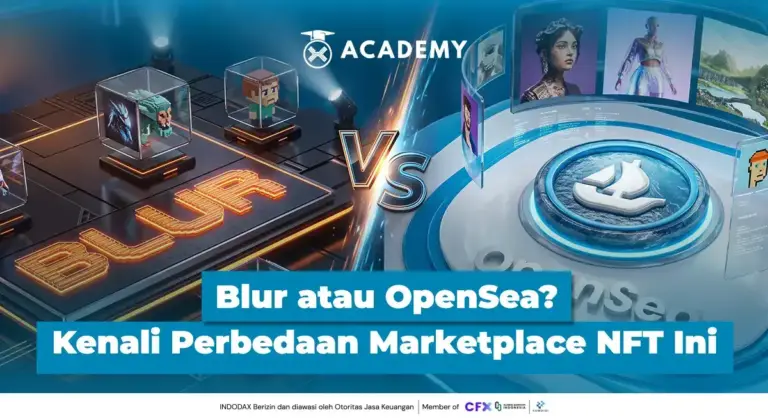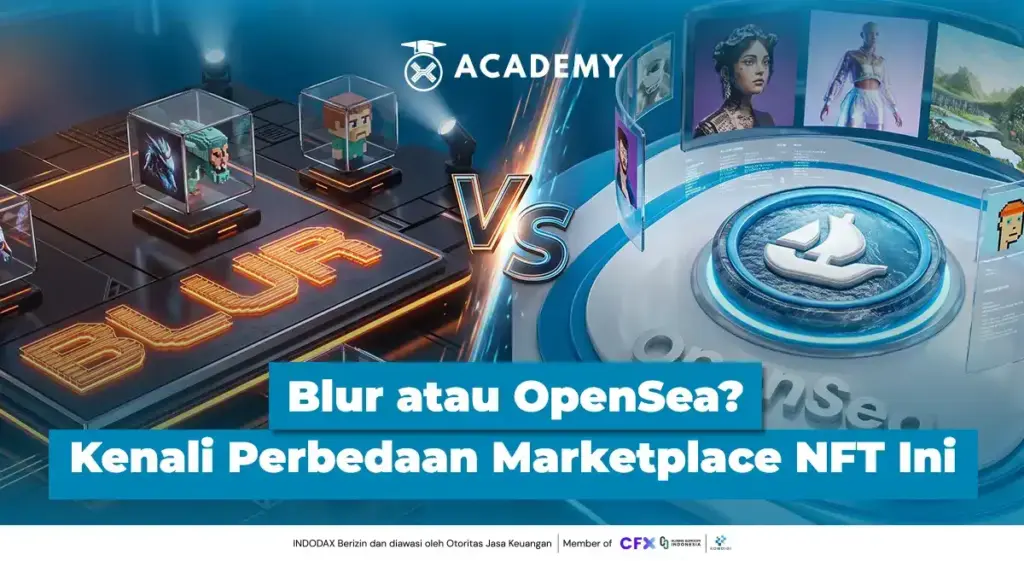
NFT marketplaces have grown rapidly since the NFT boom a few years ago. If you’re new to this digital asset, understanding what NFTs are will help you understand the differences between OpenSea and Blur. Both are platforms used to buy, sell, and trade NFTs.
While they function similarly, they have different focuses. OpenSea prioritizes convenience for collectors and creators, while Blur is designed for active NFT traders.
In this article, we’ll discuss the differences between the two and help you determine which platform best suits your needs.
Why Are Blur and OpenSea Often Compared?

Blur and OpenSea are often compared because they are both NFT marketplaces. However, the difference is that OpenSea focuses more on collectors, creators, and casual traders.
Meanwhile, Blur provides various trading tools for NFT traders, supporting faster transactions. This difference in approach is what makes them often the primary choice in the NFT market.
Blur vs. OpenSea Differences
Although both are NFT marketplaces, Blur and OpenSea have different focuses, as explained below.
1. Target Users
OpenSea is more suitable for beginners, collectors, and creators. Meanwhile, Blur is aimed at active traders, whales, and experienced users.
2. Interface and User Experience
OpenSea offers a visual, simple, and easy-to-use interface. In contrast, Blur uses a trading dashboard with real-time data, listings, offers, and portfolio analytics.
3. Trading Features
Blur provides features such as bulk listing, bulk bidding, portfolio analysis, and marketplace aggregation. OpenSea focuses more on NFT purchases, listings, and exploring collections.
4. Fees and Royalties
Both have specific rules regarding transaction fees and creator royalties. However, Blur and OpenSea have creator royalty policies that are constantly evolving to reflect the developments in the NFT industry.
5. Blockchain Support
OpenSea supports a wider range of blockchain networks, while Blur focuses on networks widely used for NFT trading.
If you’re not familiar with how this technology works, you can read about blockchain to better understand the differences in network support on each marketplace. Blockchain support on both platforms can also expand as services are updated.
Why Do Many NFT Traders Choose Blur?
Blur is a popular choice among NFT traders because it offers fast transactions, trading efficiency, real-time market data, and better liquidity.
This platform also features marketplace aggregation and various professional features that support trading activities.
Why Do Many Collectors Continue to Use OpenSea?
OpenSea remains a popular choice for many collectors because of its easy-to-understand and user-friendly interface.
This platform also makes it easier to explore various NFT collections, is supported by a large community, and provides a more suitable environment for creators to publish and market their work.
How Do Blur and OpenSea Support NFT Creators?
OpenSea offers an easier minting process, making it suitable for creators just starting out. If you plan to publish your own digital works, understanding how to create NFTs can also be a valuable asset before using this platform. Meanwhile, Blur focuses more on NFT liquidity and trading activities.
Both platforms continue to support creator royalties, although royalty policies may change as the NFT industry evolves.
Will Blur Replace OpenSea?
Blur doesn’t completely replace OpenSea, as the two now have different roles in the NFT ecosystem.
Blur focuses more on the needs of professional traders with features that support trading activities, while OpenSea remains a top choice for new users, collectors, and creators.
These differences mean the two platforms serve different user needs, not replace each other.
When Should You Use Blur?
Blur is better suited for active NFT trading, NFT flipping, monitoring price analysis, and managing multiple NFT assets simultaneously.
The various professional features available also make this platform more suitable for experienced users.
When Should You Use OpenSea?

OpenSea is best suited for purchasing your first NFT, selling digital works, and exploring various NFT collections.
With its easy-to-understand interface, this platform is suitable for new users, creators, and collectors focused on long-term NFT ownership.
Blur’s Advantages
Blur offers various features designed to support faster and more efficient NFT trading. Here are some of its advantages:
1. Professional Trading Dashboard
Blur provides a trading dashboard that makes it easy to monitor prices, assets, and market activity in a single view.
2. Marketplace Aggregation
Blur uses marketplace aggregation so that NFT offerings from various marketplaces can be accessed through a single platform.
3. Real-Time Analytics
This platform provides real-time market data and price movements to aid analysis before making a transaction.
4. NFT Trading Efficiency
Blur supports various features such as batch transactions, portfolio management, and other trading tools that make the NFT buying and selling process more efficient.
OpenSea’s Advantages
OpenSea has a simple and easy-to-understand interface, making it suitable for buying, selling, and creating NFTs. Here are some of its advantages.
1. Diverse NFT Collection
This platform provides a diverse collection of NFTs across various categories, making it easy for users to find the assets they desire.
2. Large Community
As one of the largest NFT marketplaces, OpenSea has a large community, helping to expand the reach of NFT collections.
3. Suitable for Creators and Beginners
OpenSea supports the process of issuing and selling NFTs in a simpler way, making it suitable for both creators and users new to NFTs.
Conclusion
In conclusion, Blur and OpenSea demonstrate that NFT users’ needs are not always the same. On the one hand, Blur was developed to support trading activities with more comprehensive analytical tools and an efficient transaction process.
On the other hand, OpenSea continues to offer a simpler experience, making it easily accessible to collectors, creators, and users new to the NFT ecosystem.
Rather than viewing the two platforms as substitutes, the Blur vs. OpenSea comparison is better understood as a choice based on intended use.
By understanding the characteristics, features, and approach of each marketplace, users can determine the most suitable platform, whether for collecting NFTs, publishing digital works, or actively trading.
That’s some interesting information about the Blur vs. OpenSea comparison: and the reasons why these two NFT marketplaces have different user bases, which you can explore further in Indodax Academy’s collection of crypto articles.
In addition to gaining in-depth insights through various popular crypto education articles, you can also broaden your horizons through a collection of tutorials and choose from a variety of popular articles that align with your interests.
Besides updating your knowledge, you can also directly monitor digital asset prices on the Indodax Market, such as Bitcoin (BTC to IDR) or other assets, and stay up-to-date with the latest crypto news.
For a more personalized trading experience, explore Indodax’s OTC trading service. Don’t forget to activate notifications to stay on top of important information about blockchain, crypto assets, and other trading opportunities.
You can also follow our latest news via Google News for faster and more reliable access to information. For an easy and secure trading experience, download the best crypto app from INDODAX on the App Store or Google Play Store.
Maximize your crypto assets with the INDODAX crypto staking feature, a practical way to earn passive income from your stored assets.
Register now with INDODAX and easily complete KYC to start trading crypto more safely, conveniently, and reliably!
Official Indodax Customer Support Contact
Official Customer Support Number: (021) 5065 8888
Official Indodax Priority Customer Support Number: (021) 5036 8888
Help Email: [email protected]
Also follow INDODAX on social media here: Instagram, X, YouTube & Telegram

FAQ
- What are the main differences between Blur and OpenSea?
Blur focuses on the needs of active NFT traders with advanced analytics and trading features, while OpenSea prioritizes ease of use for collectors, creators, and beginners. - Are Blur and OpenSea both NFT marketplaces?
Yes. Both are NFT marketplaces that allow users to buy, sell, and trade blockchain-based digital assets. - Why do many traders choose Blur?
Because Blur provides features like marketplace aggregation, bulk listing, bulk bidding, and market data that help NFT trading activities be more efficient. - Why is OpenSea still popular?
OpenSea has an easy-to-use interface, a large community, and supports a wide range of NFT collections and blockchains, making it suitable for both new users and creators. - Is Blur replacing OpenSea?
No. Both platforms have different user focuses and remain important parts of the NFT marketplace ecosystem. - Do both platforms support the same blockchains?
Some networks are supported by both, but the blockchain coverage can differ and continues to expand through updates to each platform. - Which is better for beginners?
OpenSea is generally easier to learn due to its simple interface and more intuitive NFT buying and selling process. - Why is it important to understand the differences between Blur and OpenSea?
Because each NFT marketplace offers different features, user experiences, and target markets.
Understanding their characteristics helps users choose the platform that best suits their needs, whether for collecting, trading, or selling digital works.Author: Boy
DISCLAIMER:All forms of crypto asset transactions carry risks and the potential for loss. Always invest based on independent research to minimize the risk of loss of crypto assets traded (Do Your Own Research/ DYOR). The information contained in this publication is provided on a general basis without obligation and is for informational purposes only. This publication is not intended to be, and should not be construed as, an offer, recommendation, solicitation, or advice to buy or sell any investment product and may not be transmitted, disclosed, copied, or relied upon by anyone for any purpose.
 Polkadot 2.25%
 BNB 0.52%
 Solana 4.62%
 Ethereum 2.32%
 Cardano 1.02%
 Polygon Ecosystem Token 1.87%
 Tron 2.75%
 Market