Crypto wallet security is a key foundation in the crypto ecosystem, especially when self-custody schemes place complete control of assets in the hands of users.
Without an intermediary acting as a custodian, every decision regarding wallet access, storage, and protection has a direct impact on the sustainability of digital assets.
Behind the evolution of crypto wallets, which continue to adapt to user needs, lies the role of individuals who shape the industry’s approach to security from a user perspective.
This approach isn’t just about technology, but also about how users interact with the systems they control.
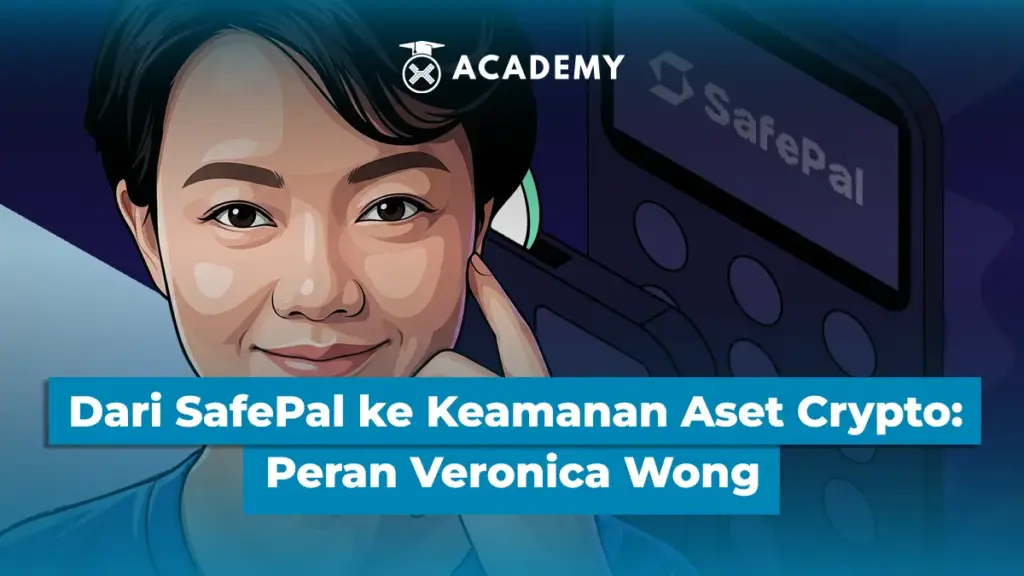
One figure driving this direction is Veronica Wong, known for her contributions to designing a wallet security approach that focuses on asset protection and user experience.
Who is Veronica Wong?

Veronica Wong is the CEO and Co-Founder of SafePal, a crypto wallet provider offering hardware wallet solutions, mobile apps, and browser extensions for digital asset management.
Through SafePal, she is known for promoting a secure wallet approach that focuses on user control over their assets.
Professionally, Veronica has a strong background in the technology and security industries.
She spent several years at Tencent, one of China’s largest technology companies, developing experience in financial security products.
This experience shaped her understanding of data protection, risk management, and the security requirements of widely used systems.
In the crypto ecosystem, Veronica Wong’s position is not only as the head of a wallet company, but also as a key figure in shaping how digital asset security is designed from the user’s perspective.
Her focus is on developing wallets that are secure, easy to use, and accessible to a wide range of users, particularly in the context of self-custody and independent ownership of digital assets.
SafePal and Its Role in the Crypto Wallet Ecosystem
SafePal is a crypto wallet used to store and manage digital assets through a self-custody mechanism.
This product comes in several formats, such as hardware devices and applications, and serves as a means for users to interact directly with the blockchain network without intermediaries.
SafePal’s approach places complete control of assets in the hands of the user.
With SafePal, private keys are not managed by any third party, so decisions regarding access, transfer, and security of assets are the sole responsibility of the wallet owner.
This approach aligns with the principle of self-ownership that underpins the crypto ecosystem.
Wallets like SafePal act as a bridge between users and their digital assets. This is where transaction signing, asset management, and access protection take place.
Crypto Asset Security Background
Crypto asset security faces various challenges stemming from direct ownership without intermediaries.
Access breaches, mismanagement of private keys, and exposure to digital attacks are real risks faced by users. Often, once data is compromised, there is no recovery mechanism.
In these situations, wallets serve as the primary layer of security because all control over digital assets occurs through them.
Access, transaction signing, and proof of ownership depend on how the wallet is used and maintained.
Risks arise not only from external attacks, but also from user error and the devices they use daily.
This combination of factors makes a user-centric security approach relevant, and also explains the important role of global crypto figures like Veronica Wong in shaping how crypto asset security is understood.
Veronica Wong’s Role in Developing Wallet Security Approaches
Veronica Wong’s role in shaping wallet security approaches is reflected in the leadership she has implemented since SafePal was developed.
Her primary focus has not been on the promise of absolute protection, but rather on designing systems that help users understand risks and manage their assets independently.
Security is also treated as part of the usage pattern, not simply an additional technical layer.
Wallet development under her leadership also prioritizes user experience as an element directly related to security.
Overly complex flows often lead to errors, so simplifying usage is seen as an effective way to reduce user risk without sacrificing control over assets.
Strategically, Veronica Wong has been instrumental in promoting the understanding of self-custody as a form of responsibility.
Wallets are not positioned as systems that completely eliminate risk, but as tools that give users complete control.
This approach contributes to the growing awareness that the security of crypto assets depends on a combination of technology, user habits, and an understanding of how digital access works.
Wallet Security and the Concept of Self-Custody
Self-custody describes a pattern of crypto asset ownership where access and private keys are held entirely by the user.
There is no intermediary storing or recovering assets, so ownership is directly vested in the individual managing them.
This change shifts control of assets from a centralized system to the user. The wallet becomes the primary tool for exercising this control, as well as the point at which digital assets are secure.
Every decision regarding the device, access, and usage of the wallet directly impacts security.
Within the Academy’s educational framework, understanding self-custody is positioned as part of basic literacy.
The focus is not solely on wallet usage, but on the awareness that crypto asset security goes hand in hand with individual responsibility.
The relationship between wallets, security, and personal control is a crucial foundation for users to manage their assets more consciously and measurably.
Crypto Asset Security Challenges at the User Level
Crypto asset security challenges at the user level often stem from how access is managed on a daily basis.
Poorly protected private key storage, the habit of using weak passwords, or neglecting additional security layers can open up unwitting hacking opportunities.
Personal devices also influence the level of risk because the phones and computers used to access wallets are often used for various other activities, potentially exposing them to malicious applications, malware, or data leaks.
This situation then makes devices vulnerable to hacking.
Furthermore, limited digital security literacy remains a major factor. Many users understand crypto from the perspective of transactions and asset values, but are not fully aware of the security responsibilities inherent in self-control.
This pattern demonstrates the need for education that helps users recognize risks without assigning blame.
The Relevance of Veronica Wong’s Role for Today’s Crypto Users
The role of wallet developers directly influences how users manage their crypto assets.
Every decision regarding design and security approach determines whether a wallet helps users understand their control or increases the room for error.
This is where the role of figures like Veronica Wong becomes relevant, as the direction of wallet development influences user habits.
The impact is evident in the interconnectedness of experience and security, with clear pathways helping users maintain control over their assets.
User experience is not separate from security, but rather becomes part of the effort to mitigate risk.
The relationship between education, technology, and crypto adoption is also becoming clearer. Technology provides tools, education builds understanding, and both together influence how crypto is adopted.
This approach helps users not only access digital assets but also understand the responsibilities inherent in independent ownership.
Lessons Crypto Users Can Learn

Understanding the role of a wallet is fundamental to crypto asset management. A wallet serves as the primary access point to digital assets, so how users treat and manage them directly impacts their security.
Security isn’t solely determined by technological sophistication. A robust system still depends on the decisions and habits of the users operating it.
Awareness of technological risks and limitations is a crucial part of asset protection.
Ultimately, if assets are managed independently, the responsibility for their security also rests with the user.
Safeguarding crypto assets means understanding the role of the wallet, recognizing that technology has limitations, and taking an active role in every decision regarding access and use.
Conclusion
So, that was an interesting discussion about Veronica Wong from SafePal’s role in crypto asset security. You can read more about it in the INDODAX Academy’s Crypto Academy.
In conclusion, Veronica Wong is one of the figures who has provided direction for how wallet security is understood from a user perspective.
The approach she advocates emphasizes that crypto asset security depends not only on technology but also on how control and access are managed by the owner.
Wallets play a crucial role because all crypto asset activities take place through these tools. How a wallet is used and maintained will significantly impact the level of risk a user faces.
Ultimately, understanding wallet functions and recognizing that security is inherently a personal responsibility will help users manage their assets more safely and effectively.
In addition to gaining in-depth insights through popular crypto education articles, you can also broaden your horizons through a collection of tutorials and choose from a variety of popular articles that align with your interests.
Besides updating your knowledge, you can also directly monitor digital asset prices on Indodax Market and stay up-to-date with the latest crypto news. For a more personalized trading experience, explore Indodax’s OTC trading service. Don’t forget to activate notifications so you don’t miss out on important information about blockchain, crypto assets, and other trading opportunities.
You can also follow our latest news via Google News for faster and more reliable access to information. For an easy and secure trading experience, download the best crypto app from INDODAX on the App Store or Google Play Store.
Maximize your crypto assets with the INDODAX Earn feature, a practical way to earn passive income from your stored assets. Register now with INDODAX and easily complete KYC to start trading crypto more safely, conveniently, and reliably!
Indodax Official Contact
Customer Service Number: (021) 5065 8888 | Support Email: [email protected]
Also follow us on social media here: Instagram, X, Youtube & Telegram
FAQ
- Who is Veronica Wong in the crypto world?
Veronica Wong is the CEO and Co-Founder of SafePal, a crypto wallet platform focused on putting asset security and control in the hands of users.Her role focuses more on wallet development and self-custody approaches, rather than the core blockchain protocol.
- What is SafePal’s role in crypto asset security?
SafePal acts as a means of storing and managing crypto assets, allowing users to retain direct control over their assets.Wallets like SafePal are a crucial layer in maintaining secure access, especially in the non-custodial crypto ecosystem.
- Why is wallet security important for crypto users?
In crypto, asset ownership is highly dependent on wallet access. If that access is compromised or misused, assets can be lost without a recovery mechanism. Therefore, wallets are crucial in digital asset security. - Does crypto asset security depend solely on wallet technology?
Not entirely. Wallet technology is important, but user factors also play a significant role. How you store access, use personal devices, and understand digital security risks all determine the level of security of your crypto assets. - What do users need to understand about the concept of self-custody?
Self-custody means that users are fully responsible for their crypto assets without any intermediaries. This concept provides complete control, but also requires greater awareness and discipline in maintaining the security of access and the devices used.

Author: Boy
 Polkadot 2.25%
 BNB 0.52%
 Solana 4.62%
 Ethereum 2.32%
 Cardano 1.02%
 Polygon Ecosystem Token 1.87%
 Tron 2.75%
 Market