The trend of tokenizing real-world assets (RWAs) is growing in the crypto industry. One example is that assets like stocks can now be converted into tokens on the blockchain.
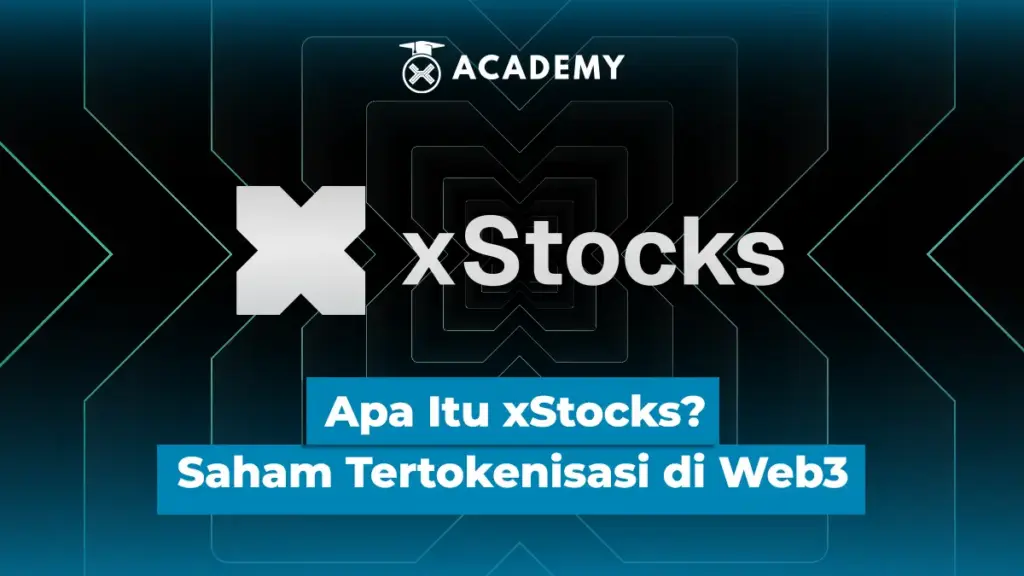
A widely discussed example is xStocks, which are tokenized stocks. xStocks are not shares purchased directly on an exchange, but rather tokens that represent those shares on a blockchain network.
The actual shares are managed by a specific party, while the tokens are traded and recorded on the blockchain. This differentiates xStocks from regular stocks and places them within the Web3 ecosystem as part of the RWA trend.
What Are xStocks?
xStocks are digital tokens that represent shares of a public company or ETF. Some models use a one-to-one (1:1) ratio with the actual shares and are issued on blockchains like Solana.
This means you don’t hold shares directly on the exchange, but tokens that represent the value of those shares.
This concept is known as tokenized stocks. The underlying shares are typically held by a custodian appointed by the issuer. Tokens are then issued at a 1:1 ratio to ensure their price remains consistent with the underlying asset.
These tokens can represent publicly traded stocks like Apple Inc. or Tesla Inc. in digital form. Because they run on a blockchain network, xStocks can be stored and traded through a crypto wallet.
With this mechanism, xStocks becomes part of the Web3 ecosystem that connects traditional stocks with blockchain technology.
How Do Tokenized Stocks Work?
Tokenized stocks convert traditional stocks into digital tokens on the blockchain without transferring legal ownership of the shares to the exchange; instead, they simply transfer their token representation to the blockchain. Here’s how it works.
1. Asset Representation and Backing Model
Each token is typically backed by a real share of stock at a 1:1 ratio. The issuer issues the token, while the custodian holds the underlying shares to maintain the value.
The token serves as a representation of the value of the stock, rather than direct ownership registered in a personal name on the exchange.
2. Token Issuance on the Blockchain
Tokens are issued on a blockchain network using a specific standard, such as SPL on Solana or ERC-20 on Ethereum. Because it is recorded on-chain, the movement and quantity of tokens can be seen transparently and connected to the Web3 ecosystem.
Why Is Stock Tokenization Part of the Real World Assets (RWA) Narrative?
Stock tokenization fits into the Real World Assets (RWA) narrative because stocks are real-world assets that can be represented digitally.
RWA itself is a physical or financial asset, such as property, bonds, gold, or stocks, whose value can be transferred and recorded on the blockchain.
In the case of stocks, tokenization transforms traditional stock ownership into digital tokens that remain backed by the original shares.
The blockchain acts as a transparent and secure record-keeping infrastructure, allowing the movement of tokens to be recorded on-chain.
This model opens up the potential for broader access, enabling global access and integration of stocks with the Web3 ecosystem and digital financial applications.
Risks and Things to Understand
Stock tokenization offers new convenience and access, but it still carries risks that need to be understood before use.
First, there is the risk of cross-jurisdictional regulation. This is because tokens can be issued in one country while the token holder is located in another, resulting in differing legal regulations.
Second, there is the risk of issuer and custodian issues. This is because tokens rely on third parties to store the original shares and ensure a 1:1 ratio. Their operational disruptions or failures can impact the token’s value.
Third, liquidity risk. This is because not all tokens have a large secondary market. Some tokens may be difficult to sell quickly without affecting the price.
Fourth, smart contract technical risk. This is because tokens run on the blockchain through automated code. Bugs or security vulnerabilities can potentially lead to losses.
Finally, there is the risk of price discrepancy with the underlying asset. This is because the value of a token in the crypto market can differ slightly from the original share price depending on demand, liquidity, and transaction costs.
By understanding the above factors, users can more wisely assess the mechanisms and potential risks of stock tokenization.
xStocks’ Position in the Current Crypto Ecosystem
xStocks currently occupies a unique position in the crypto ecosystem. It serves as an innovation that complements traditional markets, not completely replacing conventional stocks.
In the long term, xStocks has the potential to grow even more widely. This is evident in increasing investor adoption and integration with various Web3 protocols. This combination makes xStocks a bridge between real-world assets and blockchain technology.
Conclusion
So, that was an interesting discussion about xStocks in crypto, the trending concept of tokenized stocks. You can read more about it in the INDODAX Academy Crypto Academy.
In conclusion, xStocks presents a new way to access the stock market through blockchain, transforming traditional assets into digital tokens that can be traded on-chain.
This model doesn’t replace conventional exchange systems, but rather complements the financial ecosystem with new transparency and flexibility.
As part of the Real World Assets (RWA) trend, xStocks demonstrates how Web3 technology can bridge the traditional financial world with digital assets, unlocking potential efficiencies and global access.
While it offers convenience, it’s important for users to understand the tokenization mechanism, the roles of issuers and custodians, and the associated risks, so they can make informed and informed decisions.
In the long term, xStocks’ adoption is expected to continue to grow as it integrates with various Web3 protocols, strengthening its position as a bridge between real-world assets and the broader crypto ecosystem.
In addition to gaining in-depth insights through popular crypto education articles, you can also broaden your horizons through a collection of tutorials and choose from a variety of popular articles that suit your interests.
Besides updating your knowledge, you can also directly monitor digital asset prices on the Indodax Market, such as Bitcoin (BTC to IDR) or other assets, and stay up-to-date with the latest crypto news. For a more personalized trading experience, explore Indodax’s OTC trading service. Don’t forget to activate notifications so you don’t miss out on important information about blockchain, crypto assets, and other trading opportunities.
You can also follow our latest news via Google News for faster and more reliable access to information. For an easy and secure trading experience, download the best crypto app from INDODAX on the App Store or Google Play Store.
Maximize your crypto assets with the INDODAX crypto staking feature, a practical way to earn passive income from your stored assets. Register now with INDODAX and easily complete KYC to start trading crypto more safely, conveniently, and reliably!
In practice, asset transparency is now being adopted by a number of crypto platforms, one of which is through the publication of Proof of Reserves (PoR) data from third parties like CoinMarketCap. In Indonesia, Indodax is one of the platforms that regularly updates this information for public access.
Indodax Official Contact
Customer Service Number: (021) 5065 8888 | Support Email: [email protected]
Also follow us on social media here: Instagram, X, YouTube & Telegram
FAQ
- What are xStocks in crypto?
xStocks are digital tokens that represent traditional market stocks or ETFs on the blockchain. Their value typically reflects the price of the underlying asset, and these tokens can be traded through a crypto wallet or Web3 platform. - Is buying xStocks the same as buying shares directly on an exchange?
No. xStocks are digital representations of shares, not direct ownership in an individual’s name on the exchange. Rights such as dividends or voting rights depend on the issuer’s structure and platform terms. - How are tokenized stocks backed?
Some xStocks use a 1:1 ratio, meaning each token is backed by a real share held by a licensed custodian. This structure can vary by issuer, so it’s important to understand the platform’s official model. - How do xStocks relate to the concept of Real World Assets (RWAs)?
xStocks fall under the category of RWAs, which are real-world assets converted into digital tokens on the blockchain. RWA tokenization aims to increase transparency, efficiency, and global access to traditional assets. - What are the main risks of tokenized stocks?
Risks to consider include cross-jurisdictional regulation, issuer and custodian stability, market liquidity, smart contract technical risks, and potential price discrepancies between tokens and their underlying assets.Understanding these risks helps users make more informed decisions before engaging.

Author: Boy
 Polkadot 2.25%
 BNB 0.52%
 Solana 4.62%
 Ethereum 2.32%
 Cardano 1.02%
 Polygon Ecosystem Token 1.87%
 Tron 2.75%
 Market