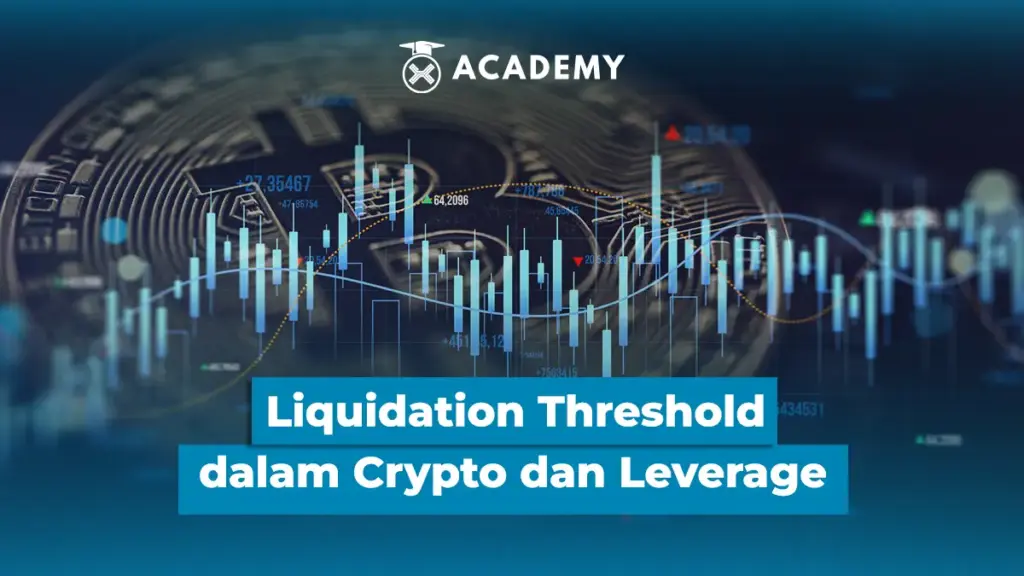
In the rapidly fluctuating crypto market, many traders and DeFi users have experienced automatic liquidation.
While it may seem like a sudden event, there are actually calculations and rules that have been established from the outset. This is where the liquidation threshold comes into play, determining when your position or collateral is deemed insufficient.
Understanding how it works can help you better understand the risks, both when using leverage and when using lending and borrowing protocols on the blockchain.
What is the Liquidation Threshold?

The liquidation threshold is a percentage limit that determines when your position is deemed insufficiently collateralized and automatically liquidated by the system.
In crypto, this threshold is used to ensure that the collateral value remains sufficient to cover loans or leveraged positions. If the debt-to-collateral ratio exceeds a predetermined figure, the system will immediately sell the collateral to cover the shortfall.
Why Is This Threshold Necessary?
Because crypto prices can fluctuate drastically in a short period of time, the system requires a clear risk threshold.
Without such a mechanism, leveraged platforms could potentially incur significant losses when user positions no longer have sufficient collateral. On the other hand, lending protocols could face defaults due to a sudden drop in collateral value.
If left unchecked, these conditions could disrupt the liquidity and stability of the overall system. That’s why the liquidation threshold acts as a safety hedge, keeping the ecosystem running despite extreme market fluctuations.
Liquidation Threshold in Leverage Trading
In leveraged trading, the liquidation threshold is the limit that determines when your position is deemed too risky and must be automatically closed by the system.
1. Relationship with Margin and Leverage
In futures, you deposit margin as collateral and then open a position with leverage. Because you’re using borrowed funds, adverse price movements will immediately reduce the margin value.
If the margin continues to decrease beyond a certain limit, the position is deemed insufficiently collateralized. At this point, the liquidation threshold is reached, and the system automatically closes the position.
2. Maintenance Margin and Liquidation Limit
Each platform sets a maintenance margin, which is the minimum amount of collateral that must be maintained to maintain a position.
If the remaining margin falls below this figure, the liquidation limit is met, and the position will be liquidated to prevent further losses.
3. The Role of Mark Price in Liquidation
Many platforms use the mark price instead of the last price as the benchmark for liquidation.
This means that the liquidation threshold is calculated based on an estimate of the fair market price, not just the last transaction price. This is to prevent liquidations from being easily triggered by momentary price spikes.
Liquidation Threshold in DeFi Lending
In DeFi lending, the liquidation threshold is the limit that determines when your loan is deemed insufficiently secured and can be automatically liquidated by the system.
1. The Loan-to-Value (LTV) Concept
In lending protocols, you deposit assets as collateral and then borrow other assets. The system sets an LTV limit, which is a safe ratio between the loan value and the collateral value.
The liquidation threshold is usually set slightly above the safe LTV as the final limit. For example, if the threshold is set at 80%, then when the loan value exceeds 80% of the collateral value, the position can be liquidated.
2. Automatic Execution via Smart Contract
In DeFi, threshold rules are embedded in smart contracts. When the loan ratio exceeds the threshold, the system automatically sells or auctions the collateral to cover the debt.
There is no human intervention. The process is transparent because it is code-based, but also decisive because it reacts immediately to rapid price movements.
3. The Role of Liquidators
Liquidations are typically executed by third parties called liquidators. They close positions that have exceeded their limits and receive incentives from the protocol.
This mechanism helps keep the protocol solvent and the funds within the system secure.
Liquidation Threshold in DeFi Lending
In DeFi lending, the liquidation threshold is the limit that determines when your loan is deemed insufficiently secured and can be automatically liquidated by the system.
1. The Loan-to-Value (LTV) Concept
In lending protocols, you deposit assets as collateral and then borrow other assets. The system sets an LTV limit, which is a safe ratio between the loan value and the collateral value.
The liquidation threshold is usually set slightly above the safe LTV as the final limit. For example, if the threshold is set at 80%, then when the loan value exceeds 80% of the collateral value, the position can be liquidated.
2. Automatic Execution via Smart Contract
In DeFi, threshold rules are embedded in smart contracts. When the loan ratio exceeds the threshold, the system automatically sells or auctions the collateral to cover the debt.
There is no human intervention. The process is transparent because it is code-based, but also decisive because it reacts immediately to rapid price movements.
3. The Role of Liquidators
Liquidations are usually executed by a third party called a liquidator. They close positions that have exceeded the threshold and receive incentives from the protocol.
This mechanism helps keep the protocol solvent and the funds in the system safe.
Factors Affecting the Liquidation Threshold
Several factors can increase the likelihood of your position reaching the liquidation threshold, including the following:
1. Leverage Level
The higher the leverage you use, the narrower the distance to the liquidation threshold. Even small price movements are enough to push a position into the risk zone.
2. Market Volatility
When the market moves sharply, the value of collateral can drop rapidly. This causes the loan ratio to spike and accelerates the reach of the liquidation threshold.
3. Asset Liquidity
Assets with low liquidity are more susceptible to sharp spikes or drops. These fluctuations make positions more vulnerable to reaching the liquidation threshold.
Risks and Impacts of Liquidation
When the liquidation threshold is exceeded, the system will automatically close positions to keep the platform solvent. This process does protect the system, but the impact can be quite severe for users. The following are the risks and impacts.
1. Capital Loss
When the debt-to-collateral ratio exceeds a threshold, for example, 80%, the position is deemed insufficiently collateralized and is immediately liquidated.
As a result, some or even all of the margin and collateral may be used to cover the debt. If the market moves very quickly, users can lose almost all of the funds used to support the position.
2. Slippage during Liquidation
Liquidation is executed automatically by the system or smart contract. In extreme market conditions, the selling price of collateral may differ from the price seen just seconds earlier.
This difference is called slippage, and it can lead to greater losses than expected as the ratio approaches the threshold.
3. Domino Effect in the Market
When many positions cross the liquidation threshold simultaneously, the system will sell large amounts of collateral to the market.
This selling pressure can push prices down further, triggering additional liquidations of other positions. The impact can create a domino effect that increases volatility in the short term.
Liquidation Risk Management Strategies
Because the liquidation threshold automatically triggers when the ratio exceeds a certain threshold, you need to maintain a safe distance to prevent your position from quickly entering the risk zone. Here are some strategies for managing liquidation risk.
1. Use Leverage Rationally
High leverage causes the debt-to-collateral ratio to quickly approach the threshold. This thins the safety cushion between the initial ratio and the liquidation threshold.
By using more measured leverage, you give yourself more room before your position is considered undercollateralized and at risk of liquidation.
2. Monitor the Margin Ratio or LTV
The liquidation threshold is usually expressed as a percentage, for example, 80% of the collateral value. If the loan-to-collateral ratio approaches that figure, the position is already in the risk zone.
Monitoring the margin ratio (in trading) or LTV (in DeFi lending) helps you make early decisions before the system automatically closes your position.
3. Add Collateral if Necessary
In DeFi, you can add collateral to lower the loan-to-collateral ratio. This step widens the gap from the liquidation threshold and adds a safety cushion.
Because liquidation is automatically executed by the smart contract when the threshold is exceeded, adding collateral can be a practical way to maintain position security during rapid market movements.
Differences in Liquidation Thresholds in Futures and DeFi
The liquidation threshold mechanism in futures and DeFi both aims to limit risk, but their operation and execution differ due to the different system structures.
In futures, the liquidation threshold is calculated from the mark price and executed by the exchange’s internal system. The entire process is centralized and controlled by the platform.
In DeFi lending, the liquidation threshold refers to oracle prices and is embedded directly in smart contracts. The process runs automatically on the blockchain, and there are usually liquidators who are rewarded for helping close problematic positions.
While the mechanisms differ in both centralized and on-chain systems, their primary function remains the same.
This is because both are designed to immediately close positions that exceed risk limits to maintain system stability during market volatility.
Conclusion
So, that was an interesting discussion about the liquidation threshold in crypto as a risk limit behind leverage and DeFi. You can read more about it in the INDODAX Academy’s Crypto Academy.
In conclusion, the liquidation threshold is often understood as a technical number within the system, but its role is far more fundamental.
It serves as a boundary line that separates positions that are still under control from those deemed too risky to leave open. As long as the debt-to-collateral ratio remains within a safe range, the system will not react.
However, when this threshold is exceeded, decisions are made automatically without considering the user’s personal expectations or strategies.
In the volatile crypto market, understanding the liquidation threshold means understanding your safe distance from real risk.
For leveraged traders, this distance is reflected in the margin limit relative to price movements. For DeFi users, it’s reflected in the LTV ratio, which constantly changes with the value of the collateral.
Awareness of this distance allows for more measured decision-making, especially when the market moves quickly and the window for response narrows.
Ultimately, the liquidation threshold demonstrates that the crypto-based financial system is designed with a firm risk limit. While potential profits are open, the system’s protection mechanisms operate according to their mathematical logic.
Understanding this threshold helps you assess risk more realistically and act before the system does.
In addition to gaining in-depth insights through popular crypto education articles, you can also broaden your horizons through a collection of tutorials and choose from a variety of popular articles that suit your interests.
Besides updating your knowledge, you can also directly monitor digital asset prices on Indodax Market and stay up-to-date with the latest crypto news. For a more personalized trading experience, explore Indodax’s OTC trading service. Don’t forget to activate notifications so you don’t miss out on important information about blockchain, crypto assets, and other trading opportunities.
You can also follow our latest news via Google News for faster and more reliable access to information. For an easy and secure trading experience, download the best crypto app from INDODAX on the App Store or Google Play Store.
Maximize your crypto assets with the INDODAX Earn feature, a practical way to earn passive income from your stored assets. Register now with INDODAX and easily complete KYC to start trading crypto more safely, conveniently, and reliably!
Indodax Official Contact
Customer Service Number: (021) 5065 8888 | Support Email: [email protected]
Also follow us on social media here: Instagram, X, Youtube & Telegram
FAQ
- What is a liquidation threshold in crypto?
A liquidation threshold is a specific ratio or price limit that triggers automatic liquidation on leveraged positions or collateral-based loans. - Is the liquidation threshold the same as the liquidation price?
The liquidation price is the specific price that triggers liquidation, while the threshold is the underlying risk ratio limit. - Do all platforms use this mechanism?
Yes, both centralized exchanges and DeFi protocols have similar mechanisms to maintain system stability. - How can I avoid liquidation?
Managing leverage, maintaining a safe collateral ratio, and understanding market volatility can help reduce the risk of liquidation. - Does the liquidation threshold apply to spot trading?
No. This mechanism primarily applies to leveraged trading and lending protocols.

Author: Boy
 Polkadot 2.25%
 BNB 0.38%
 Solana 4.19%
 Ethereum 2.32%
 Cardano 1.02%
 Polygon Ecosystem Token 1.87%
 Tron 2.75%
 Market