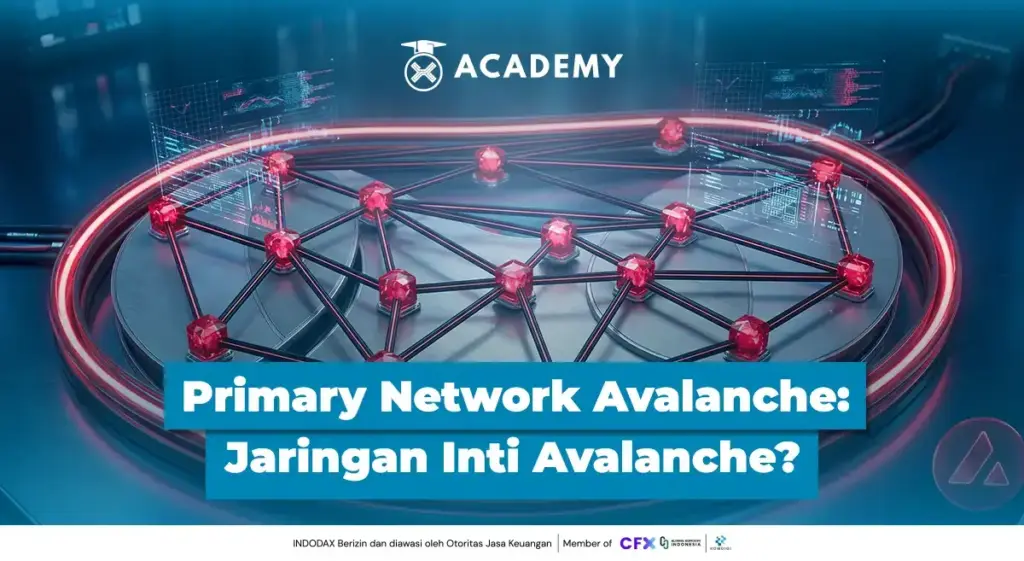
Most blockchains operate on a single primary network to process transactions and run applications.
Avalanche, on the other hand, takes a different approach with a multi-chain system, where multiple blockchains run simultaneously, each with its own distinct function.
Within this architecture, the Primary Network serves as the foundation for the entire ecosystem to function and remain secure.
Many users are more familiar with Avalanche through its AVAX token or activities on the C-Chain, but all of these are actually supported by the Primary Network.
In this article, we will review what the Avalanche Primary Network is, how it works, its relationship to the C-Chain, P-Chain, and X-Chain, and why it is the most crucial part of the Avalanche structure.
What is the Avalanche Primary Network?

In Avalanche, the entire system is built on a single layer called the Primary Network, which serves as the central hub for network connectivity and security. Here’s an explanation of the Avalanche Primary Network.
The Primary Network is Avalanche’s core network. Validators on Avalanche are included by default in the Primary Network to secure the main blockchain.
Why is it called the Core Network?
It’s called the core because all Avalanche blockchains rely on it for validation and security. Every transaction is authorized through a consensus process run on this network.
What is its primary function?
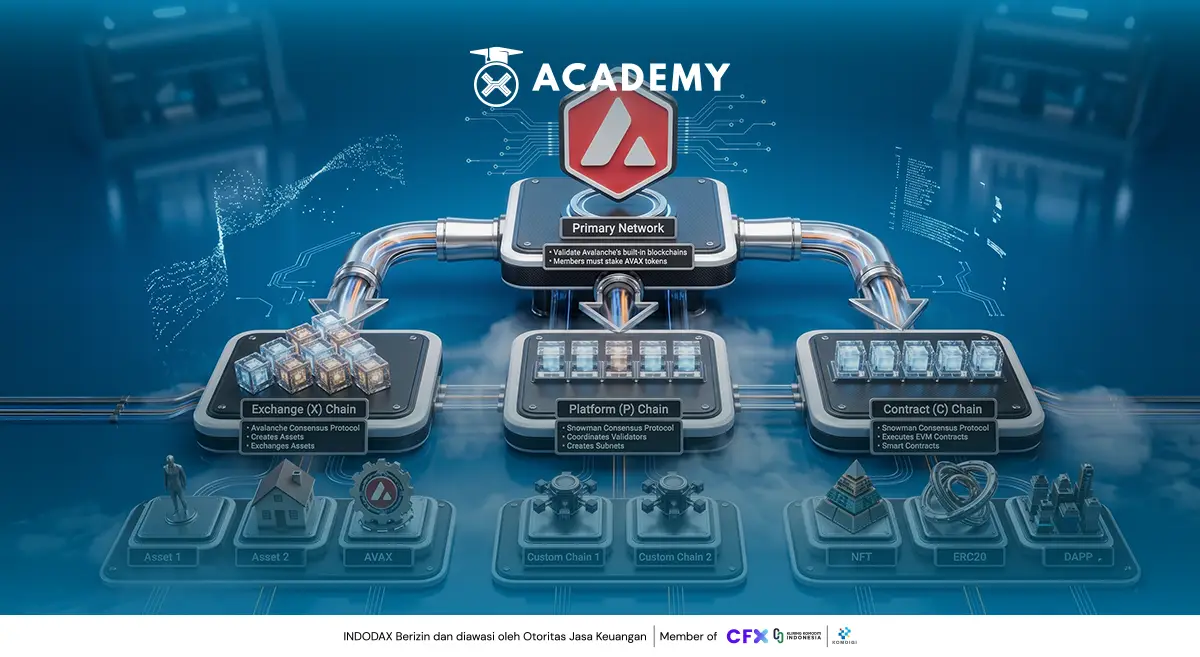
Its functions include validating the network, maintaining ecosystem security through validators, and coordinating Avalanche’s three main blockchains to keep them running in sync as a single system.
Why Does Avalanche Have a Primary Network?
In Avalanche (AVAX to IDR), the Primary Network is built as a foundation to keep the multi-chain system connected, secure, and efficient, as explained below.
1. Limitations of Traditional Blockchains
Single blockchains are often limited during high traffic because all processes run on a single network. As a result, scalability is low and it’s difficult to adapt functions to different needs.
2. Avalanche’s Multi-Chain Approach
Avalanche divides roles across multiple blockchains, including the X-Chain, P-Chain, and C-Chain. Each chain focuses on a specific function, making the system more efficient and scalable.
3. The Role of the Primary Network in This Approach
The Primary Network serves as the security foundation and validator coordination for Avalanche, consisting of the X-Chain, P-Chain, and C-Chain.
Understanding the Three Blockchains Running on the Primary Network
The Avalanche Primary Network runs three main blockchains, each with a distinct function: the X-Chain, P-Chain, and C-Chain, with explanations as follows.
1. X-Chain
The X-Chain (Exchange Chain) is used to create and transfer digital assets. This system uses a UTXO model, making asset transactions simpler and more efficient.
2. P-Chain?
The P-Chain (Platform Chain) manages validators, staking, and subnet formation. It also stores metadata that governs the network structure.
What Is the C-Chain?
The C-Chain (Contract Chain) is used for smart contracts. This chain is EVM-compatible, supporting DeFi and dApps, including Ethereum-based applications.
Why Does Avalanche Separate These Three Functions?
This separation allows each chain to focus on its own tasks, making the network faster, more efficient, and less burdensome.
How Does the Primary Network Work?
On Avalanche, the Primary Network acts as a validation hub that regulates the security and consensus of the entire network. Here’s how it works.
1. The Role of Validators in the Primary Network
Validators review transactions and protect the network from invalid data, ensuring the system remains secure and stable.
Why Must All Validators Join the Primary Network?
All validators must be connected because the Primary Network is a fundamental requirement for securing and validating the Avalanche network.
Consensus occurs through a random process of cross-checking between validators until an agreement is reached, ensuring the network remains fast, secure, and decentralized.
What is the Relationship Between the Primary Network and Subnets?
The Primary Network in Avalanche serves as the core layer that provides security and a validation system for the main blockchain, while Subnets are child networks that can be customized to meet specific needs. Here’s an explanation of the relationship between the two.
What Is a Subnet?
A subnet is a specialized blockchain within Avalanche that can be customized to your needs. Its function is to run applications with their own rules, validators, and configurations.
Why Are Subnets One of Avalanche’s Key Features?
Subnets are a key feature because they are highly flexible. Each project can customize its own system, rules, and validators without being tied to a single, fixed set of rules.
How Does the Primary Network Support Subnets?
Subnets are built using validators from the Primary Network, but can have their own rules and configurations as needed. This means that Subnets can exist with their own rules while still being secured by the Avalanche main system.
What Is AVAX’s Role in the Primary Network?
In Avalanche, AVAX is the primary token used to run and secure the Primary Network, with an explanation below.
1. Why Should Validators Own AVAX?
Validators must stake AVAX to help secure the network. This staking serves as an economic guarantee that ensures validator honest behavior.
2. How Is AVAX Used in the Primary Network?
AVAX is used for validator staking, transaction validation, and transaction fee payments on the network. All core network activities are powered by this token.
3. Why Is AVAX Important to the Avalanche Ecosystem?
AVAX strengthens network security because the more staked, the stronger the incentive to keep the system secure and stable.
What Are the Advantages of Avalanche’s Primary Network Architecture?
In Avalanche, the Primary Network provides the foundation for a faster, more flexible, and more scalable multi-chain system, with the following advantages:
1. Better Scalability
Dividing tasks across multiple blockchains allows transactions to be processed concurrently, making the network faster and more capable of handling large loads.
2. Flexibility of Blockchain Development
Developers can create subnets according to their needs with their own rules, without compromising the security of the main network.
3. Support for Ecosystem Growth
This architecture facilitates the entry and growth of many projects because each application can have its own network without disrupting the main system.
What are the Challenges of Avalanche’s Multi-Chain Architecture?
Avalanche’s multi-chain system provides greater flexibility, but it also makes the network structure more complex to understand and manage. Here are the challenges of Avalanche’s multi-chain architecture.
1. Higher Complexity
Understanding multiple blockchains such as the X-Chain, P-Chain, C-Chain, and Subnets requires an understanding of their respective functions to utilize the network more effectively.
2. Validator Infrastructure Requirements
Validators are responsible for maintaining network security and validation. A multi-chain system requires better infrastructure management to ensure the stability of all parts of the network.
3. Why is Education Important?
Understanding Avalanche’s architecture helps you utilize the network’s features more effectively, especially in selecting the appropriate chain and functions.
Why is the Primary Network the Foundation of Avalanche?
The Primary Network is the hub that connects the entire Avalanche ecosystem. Validators join this network to maintain the security and validation of transactions, including those on the Avalanche main blockchain.
The X-Chain handles digital assets, the P-Chain manages validators, staking, and subnets, while the C-Chain runs smart contracts and EVM-based applications. All three blockchains rely on the Primary Network for network security.
Subnets also don’t operate independently, as their validators must be connected to the Primary Network. Therefore, the Primary Network is the foundation that keeps Avalanche secure, coordinated, and scalable.
What Can Investors Learn from Avalanche’s Primary Network?
Understanding blockchain isn’t just about token price. Factors such as network architecture, security, validators, scalability, and utility also determine the strength of an ecosystem.
Avalanche’s Primary Network demonstrates how technology design can influence long-term growth.
Validators keep the network secure, while the multi-chain architecture helps increase efficiency and scalability.
The stronger the blockchain foundation, the greater the ecosystem’s opportunity to support new applications and needs.
Conclusion
In conclusion, Avalanche’s Primary Network serves as the core layer for validation and security of the primary blockchain, as well as validator coordination.
It runs three main blockchains: the X-Chain for digital asset management, the P-Chain for validator coordination, subnet management, and staking, and the C-Chain for running smart contracts and EVM-based applications.
These three blockchains are not standalone. They are all connected to the Primary Network, which serves as the layer that maintains validation, security, and system consistency.
Therefore, every core activity on Avalanche is always coordinated within this network, rather than operating in isolation.
The role of validators is an integral element. All validators are required to participate in the Primary Network to help maintain security and ensure consensus runs correctly.
This demonstrates that Avalanche’s security relies not on a single component, but on the interconnectedness of validators, the main chain, and its consensus mechanism.
Subnets add a layer of flexibility, but remain integral to this foundation. While subnets can have their own rules and configurations, their validation and security remain rooted in the Primary Network.
This demonstrates that Avalanche’s expansion relies on a single foundation.
Understanding this structure demonstrates that Avalanche isn’t just for running blockchain applications; it also manages scalability, security, and flexibility to work together in a single, interconnected system.
This is interesting information about Avalanche’s Primary Network, the core network behind Avalanche, which you can explore further in Indodax Academy’s collection of crypto articles.
In addition to gaining in-depth insights through various popular crypto education articles, you can also broaden your knowledge through a collection of tutorials and choose from a variety of popular articles that suit your interests.
Besides updating your knowledge, you can also directly monitor digital asset prices on the Indodax Market, such as Bitcoin (BTC to IDR) or other assets, and stay up-to-date with the latest crypto news.
For a more personalized trading experience, explore Indodax’s OTC trading service. Don’t forget to activate notifications to stay on top of important information about blockchain, crypto assets, and other trading opportunities.
You can also follow our latest news via Google News for faster and more reliable access to information. For an easy and secure trading experience, download the best crypto app from INDODAX on the App Store or Google Play Store.
Maximize your crypto assets with the INDODAX crypto staking feature, a practical way to earn passive income from your stored assets.
Register now with INDODAX and easily complete KYC to start trading crypto more safely, conveniently, and reliably!
Official Indodax Customer Support Contact
Official Customer Support Number: (021) 5065 8888
Official Indodax Priority Customer Support Number: (021) 5036 8888
Help Email: [email protected]
Also follow INDODAX on social media here: Instagram, X, YouTube & Telegram

FAQ
- What is the Avalanche Primary Network?
The Primary Network is Avalanche’s core network, which powers three main blockchains: the X-Chain, P-Chain, and C-Chain. This network serves as the security and validation foundation for the entire Avalanche ecosystem. - Why is the Primary Network important to Avalanche?
Because all Avalanche validators are required to validate the Primary Network. Without this network, the Avalanche main blockchain and its various subnets cannot operate in a coordinated manner. - What is the difference between the X-Chain, P-Chain, and C-Chain?
The X-Chain is used for the creation and transfer of digital assets, the P-Chain manages validators and subnets, while the C-Chain is used to run smart contracts and Ethereum-compatible applications. - What is the relationship between the Primary Network and subnets?
Subnets are built on top of the Avalanche ecosystem, and subnet validators must first become validators on the Primary Network. Therefore, the Primary Network serves as the security foundation for all subnets. - Do all Avalanche transactions run through the Primary Network?
The Primary Network manages the Avalanche main blockchain, which consists of the X-Chain, P-Chain, and C-Chain. Activity on these blockchains runs under the coordination of this core network. - Why should validators stake AVAX?
Staking AVAX is a requirement for participating in validating the network. This mechanism helps maintain network security while aligning validator interests with the health of the Avalanche ecosystem. - Is the Primary Network the same as the Avalanche mainnet?
Not entirely. The Primary Network is the core network that runs the Avalanche main blockchain and serves as the operational foundation for the entire mainnet. - What is the biggest lesson to be learned from the Avalanche Primary Network?
The Primary Network demonstrates that modern blockchains don’t always rely on a single chain.Avalanche builds a multi-chain architecture that allows for scalability, flexibility, and security to coexist within a single ecosystem.
Author: Boy
DISCLAIMER: All forms of crypto asset transactions carry risks and the potential for loss. Always invest based on independent research to minimize the risk of loss of crypto assets traded (Do Your Own Research/ DYOR). The information contained in this publication is provided on a general basis without obligation and is for informational purposes only. This publication is not intended to be, and should not be construed as, an offer, recommendation, solicitation, or advice to buy or sell any investment product and may not be transmitted, disclosed, copied, or relied upon by anyone for any purpose.
 Polkadot 2.25%
 BNB 0.52%
 Solana 4.62%
 Ethereum 2.32%
 Cardano 1.02%
 Polygon Ecosystem Token 1.87%
 Tron 2.75%
 Market